Resource management reform
Topics
3 min read

The Government is making changes to the Resource Management system and replacing the Resource Management Act 1991 framework with the Planning Act and Natural Environment Act.
The Government's resource management legislation passed their third reading on 23 September 2026 and will become law shortly, once they receive Royal assent. DairyNZ worked extensively throughout the reform process to advocate for a more practical and workable system that supports both productive farming and environmental improvement.
Farmers will likely not see any immediate changes to their day-to-day activities and current regional and district plan rules will be in place while the full system is developed and stood up.
DairyNZ welcomes the new resource management system and is encouraged by several important improvements secured through the legislative process, including stronger recognition of food and fibre production, a more practical framework for environmental limits, greater certainty for existing farming activities and infrastructure investment, and the removal of several proposed mechanisms that would have added unnecessary complexity for farmers.
While the legislation has now been enacted, much of the detail that will determine how the new system works in practice will be developed through national direction, national standards and regional implementation processes over the coming years. DairyNZ will continue working with farmers, government, officials and sector partners to advocate for the new system delivers practical and achievable outcomes on farm.
The Government has introduced Acts to replace the Resource Management Act 1991:
The final legislation includes several changes that align with DairyNZ's advocacy priorities:
The new legislation establishes the framework for a replacement resource management system, but the transition from the RMA will take time. Existing regional and district plans remain in force during the transition period and farmers should continue complying with current regional rules and consent requirements unless advised otherwise by their council.
Many of the practical details, including environmental limit-setting methodologies, national standards and regional implementation processes, will be developed through secondary legislation and regulations. These decisions will have a significant influence on how the new system operates in practice.
DairyNZ welcome the new legislation as it better recognises food and fibre production, provides greater flexibility in how environmental outcomes are achieved, and removes several provisions that created unnecessary uncertainty for farmers.
However, implementation will be critical. The real test of the reforms will be whether they reduce duplication, support continued environmental improvement, provide long-term certainty for farmers and rural communities, and avoid unnecessary compliance costs. DairyNZ will continue advocating for evidence-based decision-making, practical environmental management tools, and a system that works for farmers while delivering improved environmental outcomes.
Overview of the new system
The two Acts separate land-use planning and natural resource management. The aim is to develop a system with clear direction for decision-makers and make it more consistent and predictable for resource users.
The goals in each Act drive the outcomes of the system. They set out what the system must achieve and what can be regulated. It is important that the goals enable the use of natural resources such as land and water for productive land uses.
The national direction that sits under the Acts (refer to image below) heavily influence the outcomes for farmers. This detail will follow in a second phase of information in 2026 and early 2027.
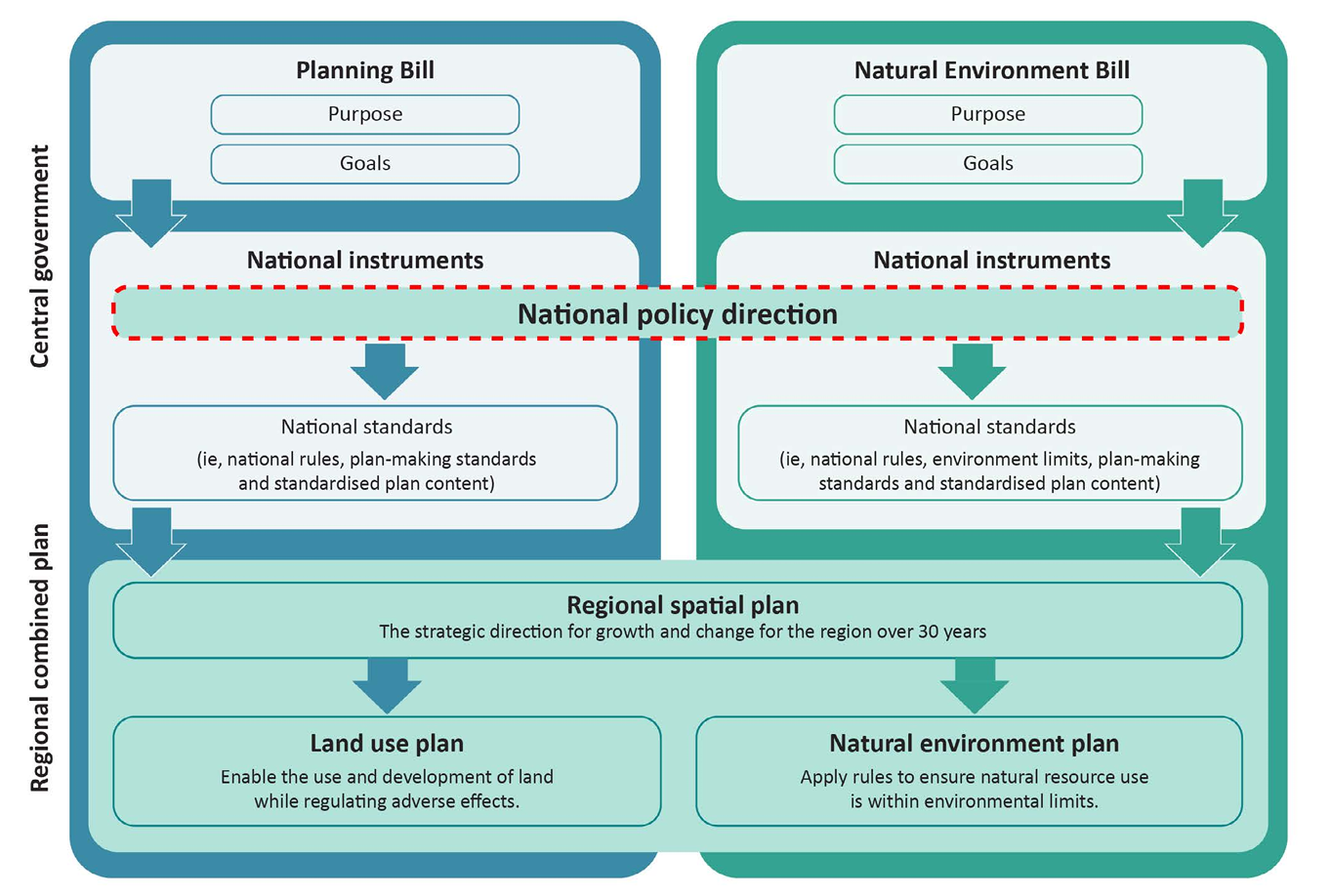
Figure adapted from: New Zealand's new planning system
Transitional system and consent duration
It will take time to fully transition to the new system, and the RMA and all regional and district plans will still be in force during the transition period.
A Transitional framework is included in the Acts. This includes:
Consents due to expire during the transition period will be extended to a date two years after the end of the period. The end date is not set and will be decided by Order in Council, once all the plans have been notified. It is likely that current consents will be extended to 2031. The RMA and all planning instruments under the RMA will cease to apply at the end of the transition period.
Consent duration already extended
Some changes to consent duration have already passed into law to make it easier for farmers to transition to a new resource management system. This is what you need to know:
More information: Resource Management (Duration of Consents) Amendment Act.
We advise you to contact your regional council if you have questions about your consent renewal.
With the legislation now enacted, the Government will begin developing the national direction, national standards and implementation arrangements needed to operationalise the new system. DairyNZ's focus will shift toward influencing these implementation decisions and ensuring farmers have clear information about what changes mean in practice.
Key priorities for DairyNZ include:
Now’s the perfect time to check in, plan, and set up for a strong season. We’ve pulled together smart tips and tools to help you stay ahead all winter long.
Whether you prefer to read, listen, or download handy guides, we’ve got you covered with trusted tools to support your journey every step of the way.
Put our proven strategies and seasonal tools to work. Boost production, support animal health and watch your profits hum.
Tools that are backed by science, shaped by farmers and made for this season.
That’s Summer Smarts.
Autumn Smarts brings together the research-backed tools that build resilience and boost performance.
The tools and insights you need to navigate the season with confidence. Backed by research and built for results – that’s Winter Smarts.


