Using plantain and stacked N mitigations in Southland
Topics
18 min read

Southland farmers in the Edendale catchment are working with the DairyNZ led Plantain Potency and Practice and Low N Systems programmes to understand how plantain and other mitigations like smarter nitrogen fertiliser use and system changes, can reduce nitrogen (N) losses while maintaining profitable milk production. Research from the programme shows that including plantain in pastures can significantly reduce nitrogen leaching without affecting milk production and quality.
This work is part of the Plantain Potency and Practice and Low N Systems research programmes. The aim is to give farmers practical options they can adopt in stages to reduce N leaching while keeping their business competitive and resilient. For Southland, modelling indicates that plantain at 20% content in perennial ryegrass-based pasture pastures:
This suggests plantain can be an effective and low-cost N mitigation in Southland. The modelling only accounts for plantain’s effect on urinary nitrogen. Further reductions in nitrogen leaching and nitrous oxide emissions are expected when the effects on soil nutrient cycling are included. Animal feeding trials show plantain may help reduce methane emissions, with further work currently underway to quantify the benefit.

Edendale Plantain Potency and Practice programme partner farmers and team members
From left Tessa Miller (Thriving Southland), Miranda Hunter (consultant), Freddie Bajo (Richburn), Kate Fransen and Lydia Farrell (DairyNZ), Rosie Forbes (Fortuna), Scott Mackereth (Fortuna, Gleneden), Richard Abbott (Rimoo Farm), Tim McRae (Raemac), Jon and Birgit Pemberton (Lowburn), and Steve Clarke (Rosebrae).

Video 05:40 min
Southland Plantain partner farms are a part of the Edendale Aquifer Catchment group, formed in 2024 through the Three Rivers Catchment Group. The group helps local communities to connect, learn and adopt practical, sustainable environmental practices. The Edendale Catchment covers about 24,000 ha on both sides of the Mataura River and includes dairy, sheep and beef, and dairy grazing, industry landholdings, and two townships. Read more about the group’s work here.
Modelling stacked mitigations on five Edendale partner farms showed that plantain, combined with good management practices, can reduce nitrogen leaching by an average of 17% over multiple years, with only a 1% reduction in operating profit. Examples of lower-cost good management practices include:
Further mitigations, such as pasture-based wintering, changes to winter cropping systems, stand-off facilities, and further reductions in feed and fertiliser, can reduce N losses by up to 43%. However, these options reduced profitability by 31% in the modelling.
Catchment scale modelling indicates plantain at 10–20% of the feedbase can prevent 48-76 tonnes of N from entering groundwater. It also shows a collective $2-3M/year higher profit for farmers in the catchment, compared with achieving the same reductions using other mitigations. The modelled reductions only account for plantains effect on urinary nitrogen. Further reductions are possible when plantains effect on soil nutrient cycling and drainage is included.
Research conducted in Dunedin and at Southern Dairy Hub also show potential for large reductions in nitrous oxide emissions. Further work is underway to quantify these benefits.
Monitoring on partner farms indicates that if plantain is included in the seed mix at pasture renewal on 10% of the farm each year, an average of 6-10% plantain can be achieved across the whole farm. New swards achieve an average of 26% plantain and decline to 10% after three years. If seed is also broadcast into existing pastures, an average of 10-15% can be achieved across the whole farm.
Partner farmers Tim and Justine McRae (Raemac Farm) and Steven and Hayley Clarke (Rosebrae Farm), along with Southern Dairy Hub (SDH), have been establishing Ecotain® plantain on their farms for the past four years. Smaller amounts of plantain have been sown on the other four Edendale partner farms, with results included in the farm case study section below.
On Raemac, Rosebrae and SDH, plantain has been included in the seed mix with perennial ryegrass and clover in new pasture swards sown between October and November at around 10% of the farm each year.
In addition, broadcasting plantain seed with a tow-behind fertiliser spreader into existing pasture swards in spring has been trialled on 45 paddocks over the past three years to assess the effectiveness of this method for boosting whole farm plantain content.
Figure 1 shows annual autumn monitoring results using the DairyNZ Plantain Visual Assessment Guide. On average, newly sown swards achieved 26% plantain in the first autumn, declining to 17% in the second autumn, 10% in the third autumn and 6% by the fourth autumn. At this rate of decline, farms establishing an average of 10% of the farm each year can expect to maintain 6% plantain as a weighted average across the whole farm (Figure 2).
Results from broadcasting plantain into existing perennial ryegrass-based pastures varied across partner farms. On average, plantain made up 7% of pasture dry matter in the first autumn, 12% in the second autumn and 3% in the third autumn. Higher levels in the second season after broadcasting have also been observed in other regions, with plantain first emerging in the autumn after establishment and peaking after about 18 months. The high second-year results seen on Raemac may also reflect seed being applied into pugged areas in the spring of 2024.
Farmers in Canterbury have broadcasted 2-3 kg seed per hectare across whole farms annually, allowing levels to be maintained at 10-15%. More data is needed from Southland to fully understand the potential of this strategy.
Using results from one- to three-year-old newly established swards, together with results from one- to two-year-old broadcast areas in existing swards (assumed to be 70% of the farm), plantain levels could average 12% across a whole farm (Figure 2, right). Table 1 shows an example calculation for the average farm. Higher levels may be possible if second- and third-year swards are broadcast annually to maintain existing plantain levels.
Current actual levels achieved on the farms (Figure 2) reflect the majority of establishment currently occurring as new swards only on 10% of the farm each year.
| Sward age | 1 (new sward) | 2 (new sward) | 3 (new sward) | 1 and 2 (broadcast) |
Total weighted average % |
| Plantain % of dry matter | 26 | 17 | 10 | 10 | |
| % of farm | 10 | 10 | 10 | 70 | |
| Weighted average % | 2.6 | 1.7 | 1 | 7 | 12 |
Table 1. Calculation of expected weighted average across the whole farm for a strategy of including plantain in seed mix of new swards on 10% of the farm each year and broadcasting 70% of the farm with seed every 1-2 years.

Figure 1
Plantain content of total DM visual assessment by age of sward and sowing method. Error bars show the standard error from the mean.

Figure 2
Plantain content of total DM visual assessment – actual and expected whole farm averages. Expected is calculated based on 10% of the farm renewed each year (middle) and 10% renewed each year plus 70% broadcasted every 1-2 years (right).
These are the key observations from seven Southland Plantain partner farms. For full establishment and management guidance, see the DairyNZ Plantain webpage.
Pasture yield was measured in a Plantain Programme field trial in Edendale from 2022-2024. Figure 3 compares pasture growth rates for a treatment sown with 24 kg/ha diploid perennial ryegrass (cultivar One50) with a treatment sown with 20 kg/ha perennial ryegrass and 3 kg/ha plantain (cultivar AgriTonic). The results show similar or greater pasture growth rates with plantain, with higher growth rates in the late spring and summer in the second year.

Figure 3
Pasture growth rate (average daily herbage accumulation, kg DM/ha/day) and plantain content on Southland Brown soils over three years in Edendale for pastures sown with perennial ryegrass alone and perennial ryegrass with 3kg/ha plantain.
Pasture growth was also measured using a rising plate meter at the Southern Dairy Hub on perennial ryegrass/clover pastures with 15% plantain vs. without plantain, from June 2023 to June 2024. The plate meter was calibrated to adjust for the lower DM% of plantain using equations developed at the Lincoln University plantain farmlet trial (see reference here). The slightly higher growth rates with plantain in summer-autumn are consistent with data from other sites.

Figure 4
Pasture growth rates (net herbage accumulation) of perennial ryegrass/white clover pastures with average 15% plantain vs. without plantain, at Southern Dairy Hub 2023-24.
When modelled in Overseer, plantain reduced nitrogen leaching on Edendale partner farms by an average of 6.5% for every 10% plantain in pasture as a whole farm average, including crop and riparian (Figure 4). Farms using the most pasture per hectare, and with the lowest levels of imported supplement, crop and riparian areas, tended to have the greatest modelled nitrogen leaching reduction from plantain.
Overseer currently only models the well-documented effect of plantain on cow urinary nitrogen. Recent research in the Plantain programme suggests that this accounts for approximately half to three quarters of the effect of plantain on nitrogen leaching, with the remaining effects coming from the effect on nutrient cycling in soil. These effects have been confirmed more recently, and an aim of the programme is to provide the evidence needed to include them in Overseer. Read more about how plantain works here.

Nitrate leaching modelled in OverseerFM for 0, 10 and 20% whole farm plantain content in pasture on six Edendale partner farms and Southern Dairy Hub.
Stacked mitigation modelling was completed for five Edendale partner farms to assess the potential impact of plantain and other nitrogen leaching mitigations on production, profitability and environmental outcomes. Farmax was used to predict farm production and profit, while Overseer was used to predict N losses to environment.
Figure 5 shows the profit and nitrogen leaching responses when mitigation steps were added in sequence. The lowest-cost mitigations were applied first, followed by more expensive options. Mitigation steps were only applied to farms where relevant. For example, changing to a lower-protein feed was only modelled where a high-protein feed was already being used. Multiple practices were included in the Good Management Practice step (GMP), such as fertiliser timing, low crude protein feed selection, reducing autumn fertiliser and early culling. The deintensification step included larger sequential reductions in feed and fertiliser, and lowering stocking rates.

Figure 5
Impact of implementing a sequential stack of mitigation steps on Overseer-modelled nitrogen leaching and Farmax-modelled operating profit for five Edendale farms. Farm data sourced from DairyBase 2022-23.
Good management practices provided opportunities to reduce nitrogen leaching with no impact, or a slight increase, in profit. Key opportunities included:
Plantain was included in two steps. The first by including in new swards at 3 kg/ha (at $21.70/kg) achieving 10% average plantain content and the second by also broadcasting 4 kg/ha of coated seed (at $11.40/kg) across the whole farm with fertiliser annually, lifting levels to 20%. It was assumed no extra labour cost was required.
Further reductions in nitrogen leaching were possible through baleage wintering, reductions in supplementary feed and fertiliser, and construction of stand-off facilities. Together, these steps delivered an average of 43% reduction in nitrogen leaching but reduced operating profit by 34%.
Constructed wetlands can reduce nitrogen loss to water when they are targeted to lower-performing parts of the farm where water already concentrates, such as seeps, tile drains or other flow pathways. In the right location, they can reduce nitrogen loss, trap sediment, slow water flow, and support habitat and biodiversity while minimising the loss of productive land. A constructed wetland is being trialled on Birgitte and Jon Pemberton’s farm, Lowburn, as part of Edendale Aquifer Group activities.
Installation of a free-stall barn is more expensive than most other options and requires adaptation of the farm system to achieve the best returns.
Catchment modelling combined farm level results with the Catchment Accounting Framework and DairyNZ’s Dairy Sector Pathway model. It shows how realistic changes adopted across 62 dairy farms and 16,000ha in the catchment could affect overall N loss and profitability.
Results showed:
Two studies through the New Zealand Ag Emissions Centre have been looked at the effect of Ecotain® plantain on nitrous oxide emissions in Southland. In Dunedin, nitrous oxide emissions decreased as the proportion of plantain increased from 15 to 45% of sward dry matter. At Southern Dairy Hub, nitrous oxide emissions were reduced by around 50% from three cultivars of plantain grown as pure swards, compared with perennial ryegrass. Further information can be found here:
Edendale farmers and the Southern Dairy Hub have been trialling plantain on their farms and taking part in DairyBase benchmarking and stacked nitrogen mitigation modelling using Farmax and Overseer. Their experiences are summarised below.
Tim and Justine McRae, Raemac Farm, Edendale
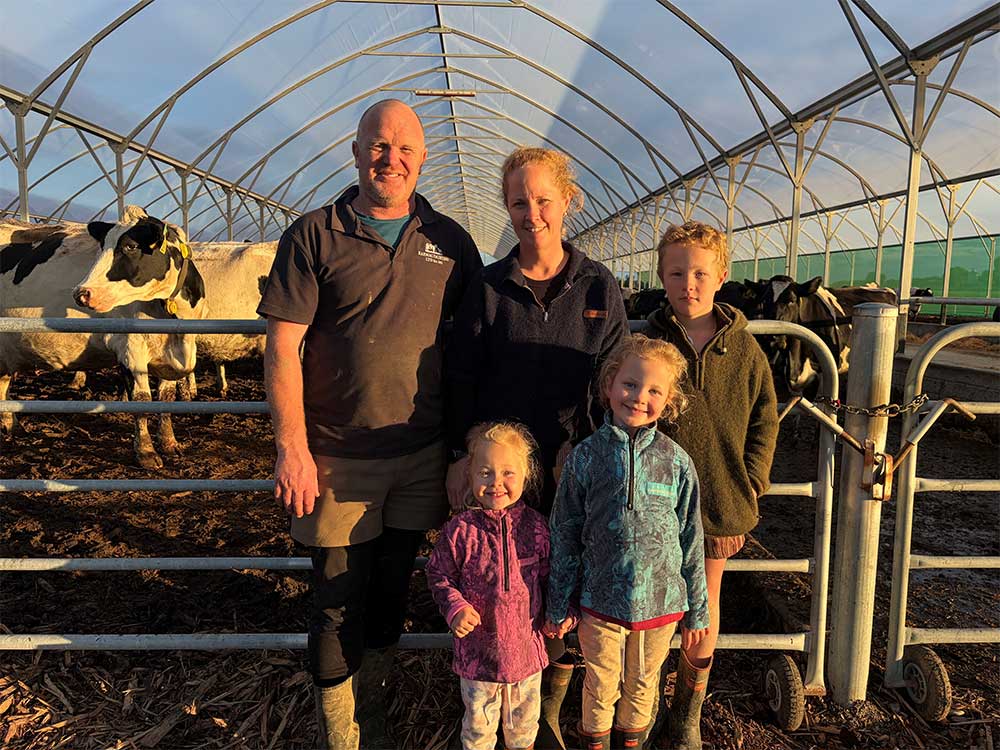
Tim and Justine McRae, Raemac Farm, Edendale.
Tim and Justine McRae farm a 155 ha milking platform alongside an 84 ha support block, integrated runoff and barn system in Edendale. Together with their three children, they run a highly productive and profitable dairy business while actively supporting environmental improvement within their catchment.
As Chair of the Edendale Aquifer Group and a Plantain Partner Farmer, Tim has been at the forefront of adopting plantain to help reduce nitrogen leaching. Each year, he renews around 10% of the farm with new pasture swards, adding 3 kg/ha of Ecotain® plantain seed into the mix. New pastures are established using a roller drill into well-prepared seedbeds. Swards are pre-graze mown before the first grazing when plantain reaches the six-leaf stage, helping suppress weed growth and support successful pasture establishment.
Tim has also successfully trialled broadcasting plantain seed into existing pastures across approximately 10% of the farm. The approach proved particularly effective in paddocks that were damaged during the exceptionally wet spring of 2024. Plantain content across the farm currently averages 7-8%.
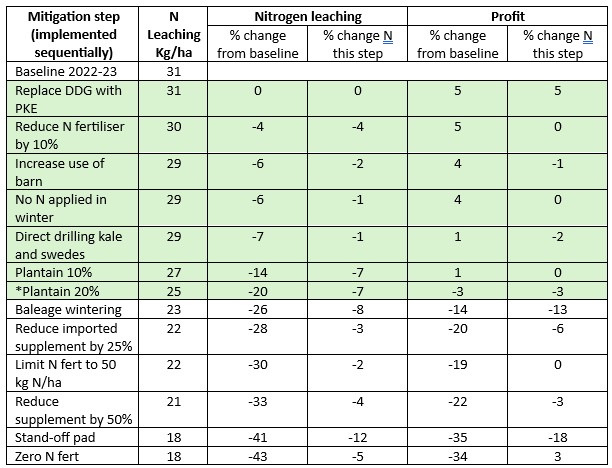
Farm systems modelling identified several complementary strategies to further reduce nitrogen losses, which Tim has implemented in the 2025-26 season. These included replacing high-protein DDG feed with PKE, reducing nitrogen fertiliser use from 132 kg N/ha to 98 kg N/ha by lowering March applications, increased use of the barn, and shifting some nitrogen applications from August to October. Later steps in the modelling come at higher cost to the business (Table 2).
Through plantain and practical system changes, the McRae family is showing how profitable dairy farming and environmental stewardship can work together.
Table 2: Stacked mitigation modelling using Farmax and Overseer for Raemac using DairyBase data from the 2022-23 season.
Steve and Hayley Clarke, Rosebrae, Brydone
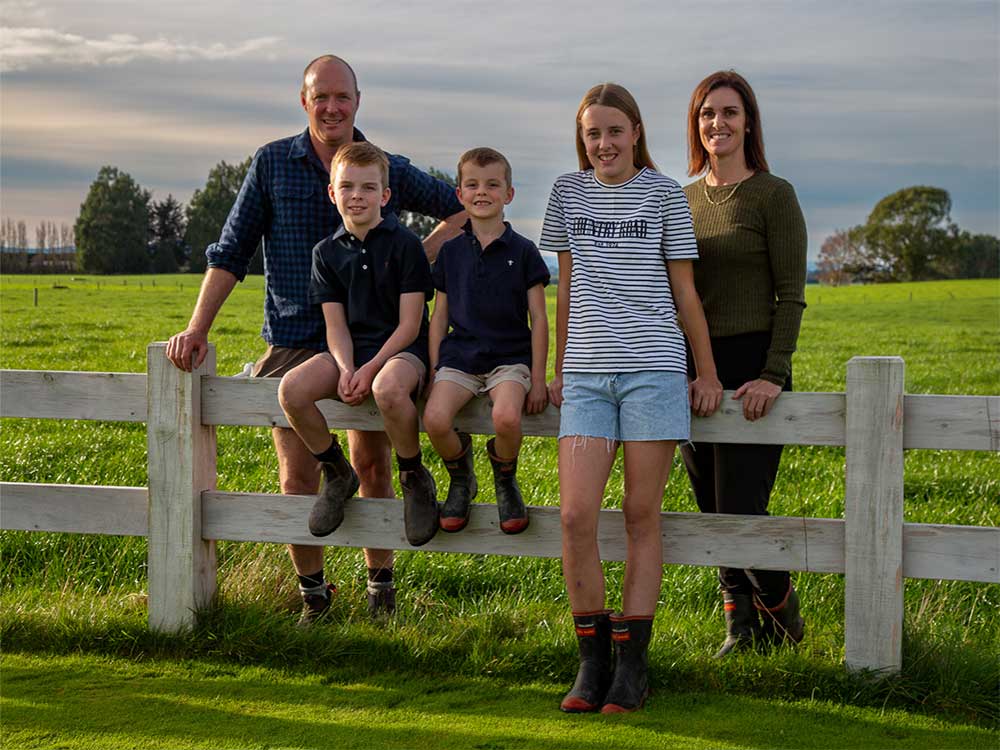
Steve and Hayley Clarke with their three children.
Steve and Hayley Clarke are the owner-operators of Rosebrae, a family dairy farm on the edge of the Edendale Terrace in Southland. Farming on the terrace brings specific challenges, including higher nitrogen leaching risk. Reducing their environmental footprint while maintaining a profitable business is central to the Clarkes’ management decisions.
Rosebrae includes a 156-hectare milking platform and a 20-hectare lease block used for wintering and raising young stock. In 2025, the Clarkes purchased an adjoining 88-hectare runoff block, creating opportunities to expand the dairy operation while improving environmental outcomes. The additional land allows around half the herd to be wintered on pasture and baleage on farm, reducing reliance on external grazing and helping minimise nitrogen losses.
The farm has traditionally milked around 470 cows, increasing to 520 cows at the beginning of the 2025/26 season. Strong pasture and crop production, yielding between 13.2 and 14.8 tonnes of dry matter per hectare, underpins consistently high levels of milk production and profitability. Performance sits well above regional benchmarks, with milk production averaging around 130% (1700 kg/ha) and profit approximately 150% of the Southland benchmark. Over the past two seasons, nitrate leaching has been 40 kg/ha and 34 kg/ha.
Plantain is an important role in the Clarkes' environmental strategy. Each year, they renew about 10% of the farm using a roller drill, adding Ecotain® plantain at 3 kg/ha to new pasture mixes. They have also achieved strong results by broadcasting plantain seed with fertiliser using a tow-behind spreader across the terrace areas, which make up around one-third of the farm and have the highest nitrogen leaching risk.
Timing is critical. Steve aims to establish new pastures and oversow plantain into existing pastures when soil temperatures start to rise around Labour Weekend. This helps maximise the establishment window before summer dry conditions and reduces the opportunity for annual grass weeds to fill gaps in pasture. Through this ongoing programme, plantain now makes up about 6% of the pasture base across Rosebrae and is predicted to reach 10-15% with continued implementation. This supports the farm’s wider efforts to improve environmental performance while maintaining a productive and profitable dairy system.
Matthew and Vanessa Richards, Richburn Dairies, Edendale
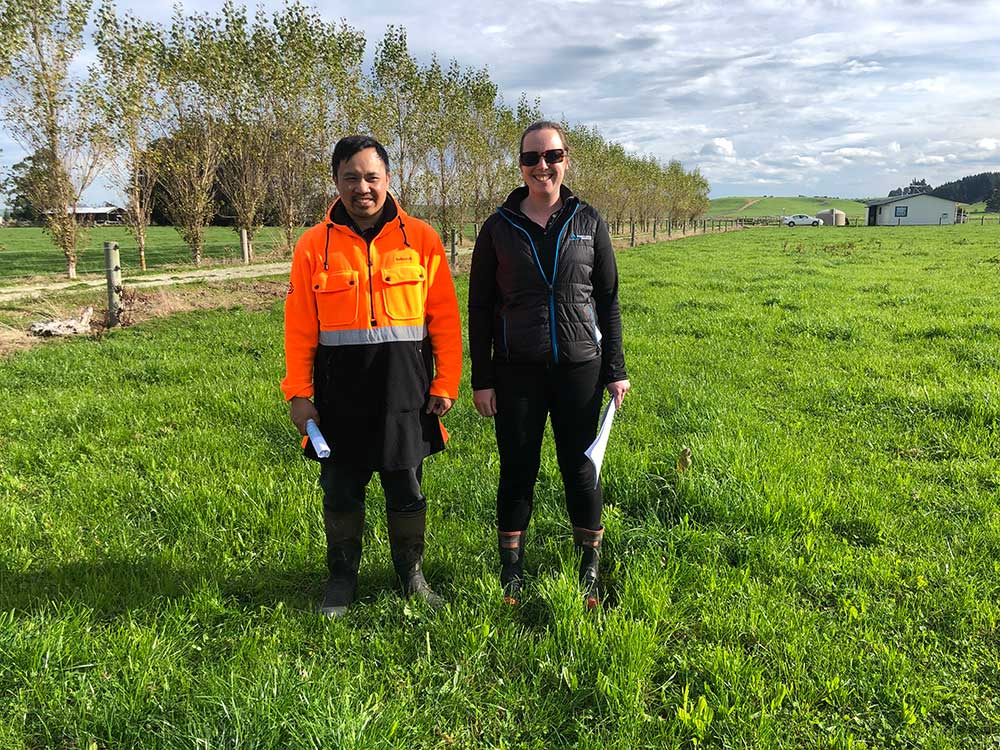
Contract milker Freddie Bajo with Fortuna Environment Manager Rosie Hunter.
Matthew Richards, formerly Chief Executive of the Fortuna Group and now focussed on managing his own farms Richburn and Jayvor, works with wife Vanessa to achieve strong farm performance while managing their environmental footprint. Matthew says benchmarking is vital to their business. They aim to be in the top quartile for profit while continuing to look for opportunities to improve environmental outcomes.
Managed by contract milker Freddie Bajo, Richburn has a 161 ha milking platform with 440 cows producing 1300-1400 MS/ha. Young stock and part of the milking herd are wintered off farm. Operating profit has been 135-164% of the Southland average for the past four years, while N leaching has ranged from 32-42 kg N/ha.
Around 5% of the farm is renewed with new pastures each year and Ecotain® plantain has been included in the seed mix at 1 kg/ha together with Base tetraploid ryegrass (27 kg/ha), red clover and white clover each at 4 kg/ha. New swards averaged 20-25% plantain in the first two years and the farm reached 4% plantain in 2024. Spraying for Californian thistles meant plantain levels dropped in 2025. In summer/autumn 2026, plantain was broadcast with fertiliser across around half of the farm. Going forward, Matthew plans to increase the seeding rate of new swards to 3 kg/ha Ecotain® and maintain larger areas with broadcasting in established pastures at 2 kg/ha.
Alongside plantain, the Richards have increased their effluent area and are wintering more cows off farm, helping reduce N leaching. They have also completed significant riparian planting on Jayvor and plan to start planting on Richburn this year.
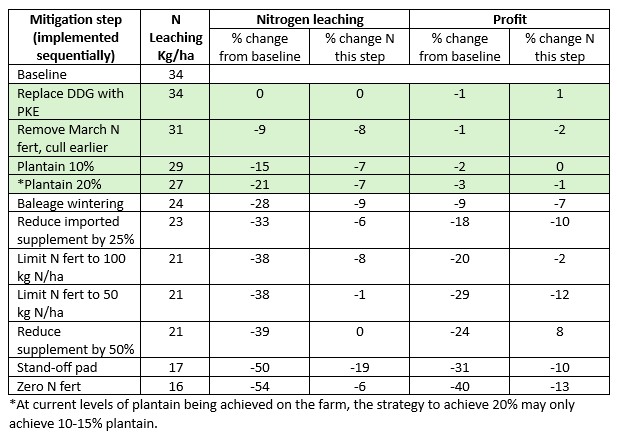
Stacked mitigation modelling identified opportunities to reduce nitrogen leaching by replacing 24 tonnes of high-protein DDG with PKE and culling cows earlier to remove the March fertiliser application, dropping total N inputs from 156 kg/ha to 138 kg/ha. Together with plantain, these steps result in a 21% reduction in nitrate leaching with a 3% drop in operating profit. Later steps came at higher cost to the business (Table 3).
Table 3: Stacked mitigation modelling using Farmax and Overseer for Richburn using DairyBase data from the 2022-23 season.
Scott and Stacey Mackereth, Fortuna Group, Gleneden
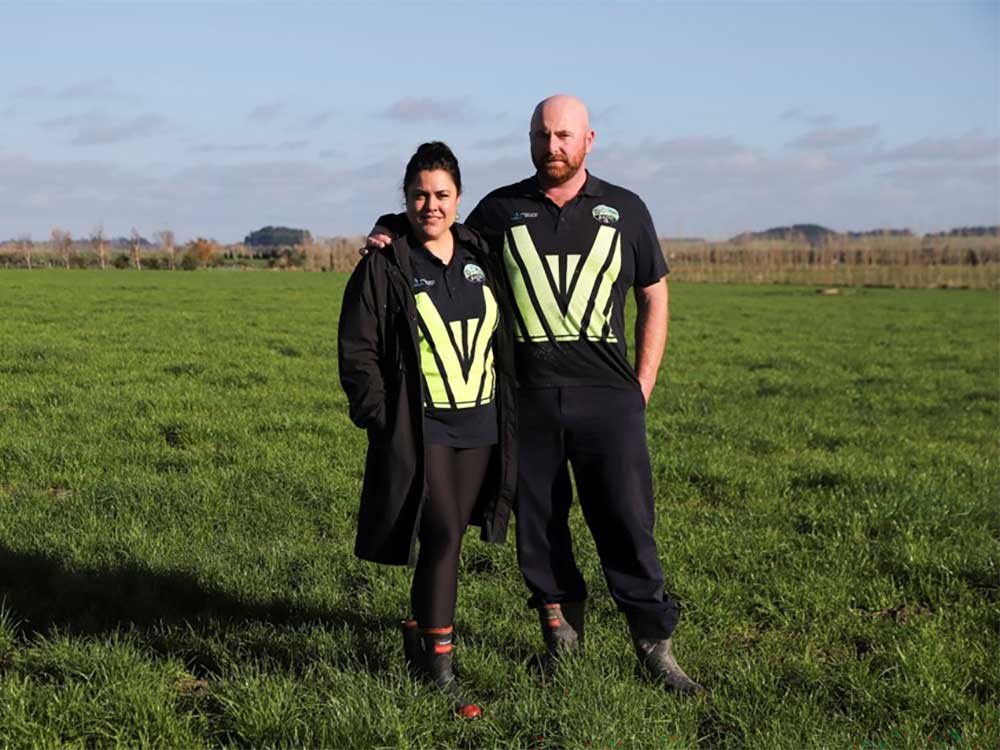
Gleneden sharemilkers Scott and Stacey Mackereth.
Gleneden, located in Wyndham, is part of the Fortuna Group and managed by Scott and Stacey Mackereth, winners of the 2026 Share Farm of the Year award. The farm is 464 ha effective and milks 1400 cows. Since the Mackereths took over in 2024/25, a focus on drainage and pasture management has increased milk production by 20%.
Environmental management is a key focus across Fortuna farms. At Gleneden this includes:
Around 5% of the Gleneden farm has been renewed with new pastures each year since 2021 and 1 kg/ha Ecotain® plantain has been included in the seed mix with 27 kg/ha tetraploid ryegrass and 4 kg/ha each of red and white clover. First and second year swards have achieved 20-25% plantain. At this level of renewal, around 4% plantain can be expected across the farm without additional broadcasting. Scott has now broadcast 25% of established pastures on the farm with Ecotain® and increased the rate of plantain in new sward seed mixes to 3 kg/ha in an effort to increase overall farm levels closer to 10%.
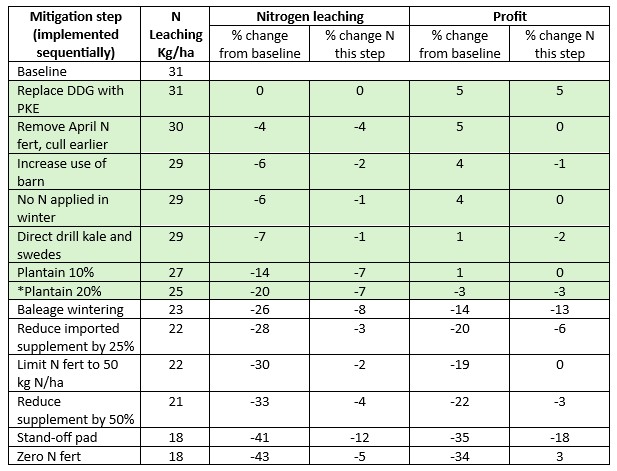
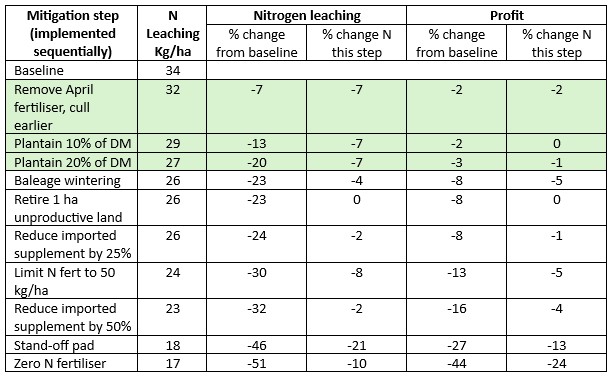
Nitrogen leaching on the farm is around 30 kg/ha. Modelling identified several lower-cost steps to reduce leaching, including replacing 145 tonnes of DDG with PKE, removing April nitrogen fertiliser applications, sending culls away in early March, reducing October nitrogen, shifting August nitrogen to September, increasing use of the barn, and increasing plantain to 10 or 20% (Table 4).
Table 4: Stacked mitigation modelling using Farmax and Overseer for Gleneden using DairyBase data from the 2022-23 season.
Richard and Nicola Abbott, Rimoo Farm, Gore
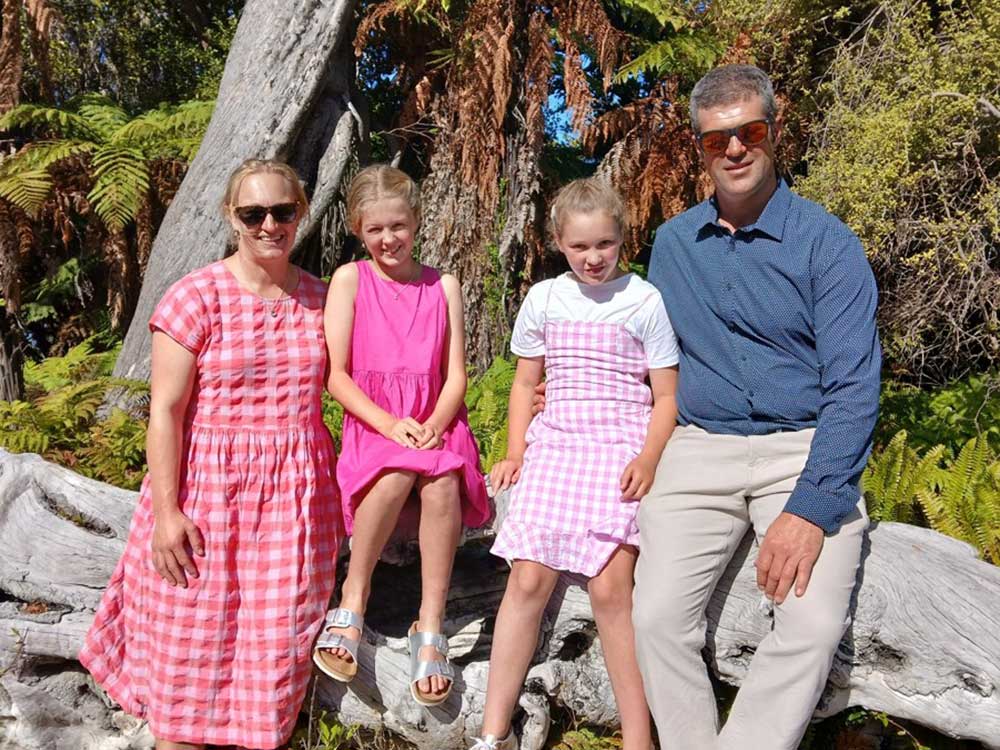
Richard and Nicola Abbott, Rimoo Farm, Gore.
Richard and Nicola Abbott are the owner-operators of Rimoo Farm, a high-performing dairy business near Gore. The farm has a 151-hectare milking platform, milks 440 cows and winters all cows off farm.
The Abbotts have recently expanded their operation by purchasing a runoff block. This is helping them to move towards a fully grass-based system, grow more home-produced feed, reduce reliance on off-farm grazing and create opportunities for future growth.
Rimoo Farm has strong productivity and profitability, producing approximately 1,350 kg of milksolids per hectare. The business consistently performs well above industry benchmarks, achieving profits around 150% of the Southland DairyBase average.
The Abbotts joined the Plantain Potency and Practice Programme in 2024 after their farm was included in stacked mitigation modelling. The modelling identified plantain as a key opportunity to reduce nitrogen leaching while maintaining farm profitability.
After visiting partner farms in Rotorua as part of the programme's annual conference, Richard was inspired to trial plantain across the entire farm. In spring 2025, he broadcast 4 kg/ha of plantain seed across established pastures on the milking platform. An autumn 2026 assessment found plantain made up approximately 4% of the pasture dry matter, with this proportion expected to increase as the plants mature through to autumn 2027.
The modelling also highlighted other opportunities to reduce environmental impact. Combining plantain with lower nitrogen fertiliser applications, from 101 kg N/ha to 88 kg N/ha, removing the April nitrogen application and bringing culling decisions forward achieved an estimated 20% reduction in nitrate leaching, with about a 3% impact on profit.
Table 5: Stacked mitigation modelling using Farmax and Overseer for Rimoo using DairyBase data from the 2022-23 season.
Jon and Birgit Pemberton, Lowburn, Edendale
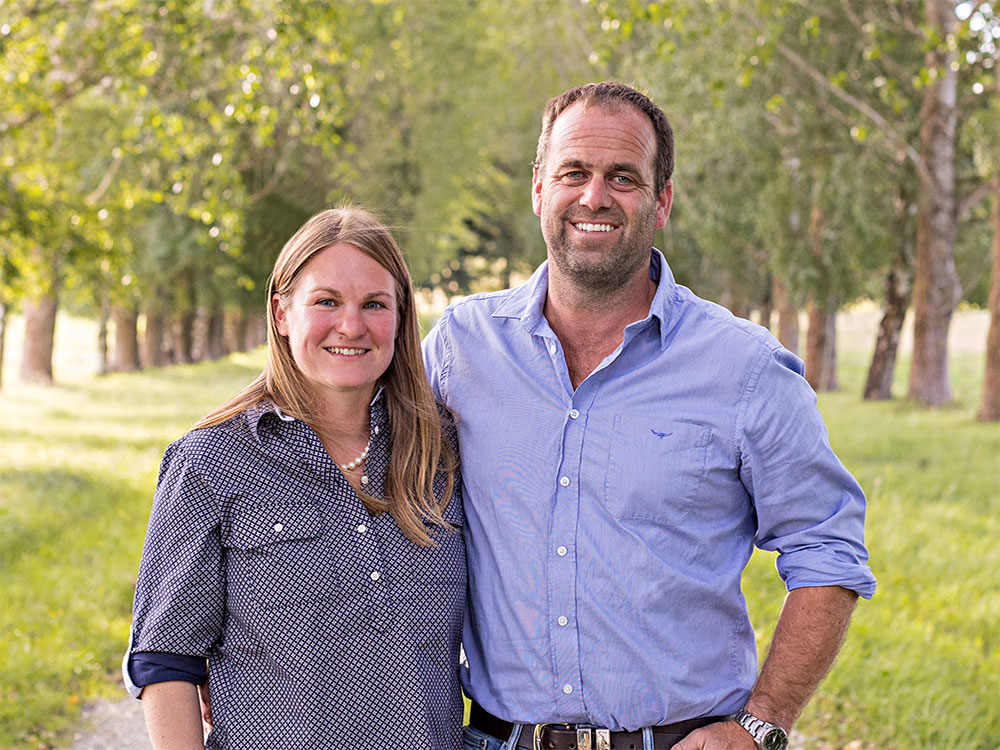
Jon and Birgit Pemberton, Lowburn, Edendale.
Jon and Birgit Pemberton own and operate Lowburn Ag in Brydone, on the Edendale Terrace near the Mataura River. Jon is a fourth-generation dairy farmer, while Birgit, originally from Austria, has helped build the business alongside him since they purchased the farm in 2014. What began as a 139 ha farm milking 370 to 400 cows expanded to 365 ha and 1,068 cows through the lease of a second property, Menzies.
Environmental stewardship is central to the Pembertons' farming approach. Birgit coordinates the Edendale Aquifer Group, and the farm has been involved in DairyNZ environmental projects focused on water quality and greenhouse gas emissions. With parts of the farm prone to flooding from the Mataura River, they have invested in initiatives to improve resilience and reduce environmental risk.
In 2025, the Pembertons purchased a neighbouring 116 ha sheep farm and began developing their "dream farm". The new operation includes a 54-bale rotary dairy, feed and silage pads, upgraded infrastructure and a 7 ha constructed wetland. Their goal is a simpler, more efficient single-platform system milking around 650 cows while continuing to strengthen environmental performance. Alongside the wetland, they are undertaking riparian planting and relocating laneways away from the bore area.
The Pembertons took part in farm systems modelling to identify opportunities to reduce nitrogen leaching, using 2022/23 data from the Brydone and Menzies farms. At the time, the system imported 3.9 t DM/ha of supplement, had 5.5 t DM/ha of off-farm grazing, and achieved high production of 540 kg MS/cow and around 1,400 kg MS/ha. Nitrogen fertiliser use was relatively low at 66 kg N/ha, while Overseer modelled nitrate leaching was 30 kg N/ha.
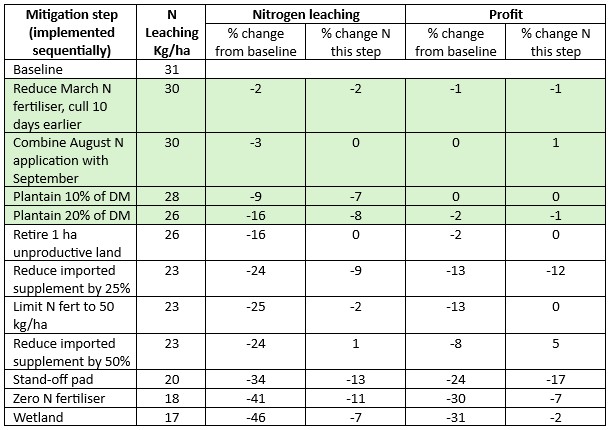
The modelling identified several opportunities to further reduce nitrogen losses, including a small reduction in March fertiliser from 66 kg/ha to 60 kg/ha, shifting August fertiliser applications to September, earlier culling, and plantain establishment. Together, these measures could reduce nitrogen leaching by 9 to 16% (depending on plantain levels achieved), with minimal impact on profitability (around 1%). The constructed wetland is estimated to provide a further 7% reduction at farm level.
The Pembertons started incorporating plantain into their nitrate leaching reduction practices by broadcasting 70 ha in silage paddocks in 2024. Only small amounts established, likely due to the high covers in the silage areas. They have since established 40 ha of plantain as new swards in spring 2025, and plan to continue with a programme to get plantain across the farm in the coming years.
Table 6: Stacked mitigation modelling using Farmax and Overseer for Lowburn Ag with combined Brydone and Menzies farms using DairyBase data from the 2022-23 season.
Changes made for 2025-26 and changes planned
Southern Dairy Hub
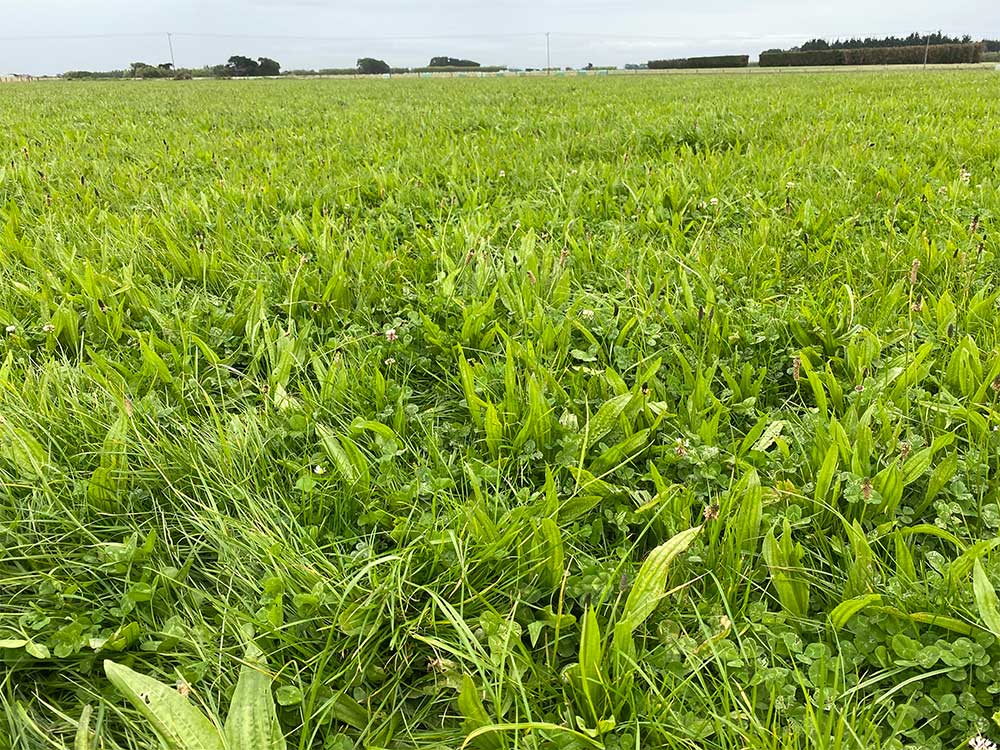
Plantain pastures at Southern Dairy Hub, March 2024.
Southern Dairy Hub (SDH) first used Ecotain® plantain in spring 2022 by including it in new pasture mixes. Plantain has been sown as part of new mixed swards in autumn and spring, with excellent establishment results. The farm achieved 10% plantain across the farm relatively quickly. New swards established with 3 kg/ha plantain averaged 25% plantain, held at around 20% for the second year and 12% in the third year. Some third-year swards have been maintained up to 20%. SDH has also trialled broadcasting into established pastures, achieving 5-10% plantain in those pastures.


Now’s the perfect time to check in, plan, and set up for a strong season. We’ve pulled together smart tips and tools to help you stay ahead all winter long.
Whether you prefer to read, listen, or download handy guides, we’ve got you covered with trusted tools to support your journey every step of the way.
Put our proven strategies and seasonal tools to work. Boost production, support animal health and watch your profits hum.
Tools that are backed by science, shaped by farmers and made for this season.
That’s Summer Smarts.
Autumn Smarts brings together the research-backed tools that build resilience and boost performance.
The tools and insights you need to navigate the season with confidence. Backed by research and built for results – that’s Winter Smarts.


