Riparian planting and wetland restoration in Taranaki
Topics
4 min read

Paul Kuriger has shaped a profitable dairy farm in Taranaki by working with the landscape rather than trying to force it into something it's not. His experience shows that biodiversity, waterway protection and farm profitability can go hand in hand when decisions are grounded in what the land can realistically deliver.
Since purchasing the farm in 2017, Paul has fenced off waterways, planted riparian margins, restored a wetland, and tackled pests, all while maintaining a low-input, low-stocking-rate system suited to the high-altitude, high-rainfall environment. He's proof that biodiversity and a strong farm business can work together seamlessly.
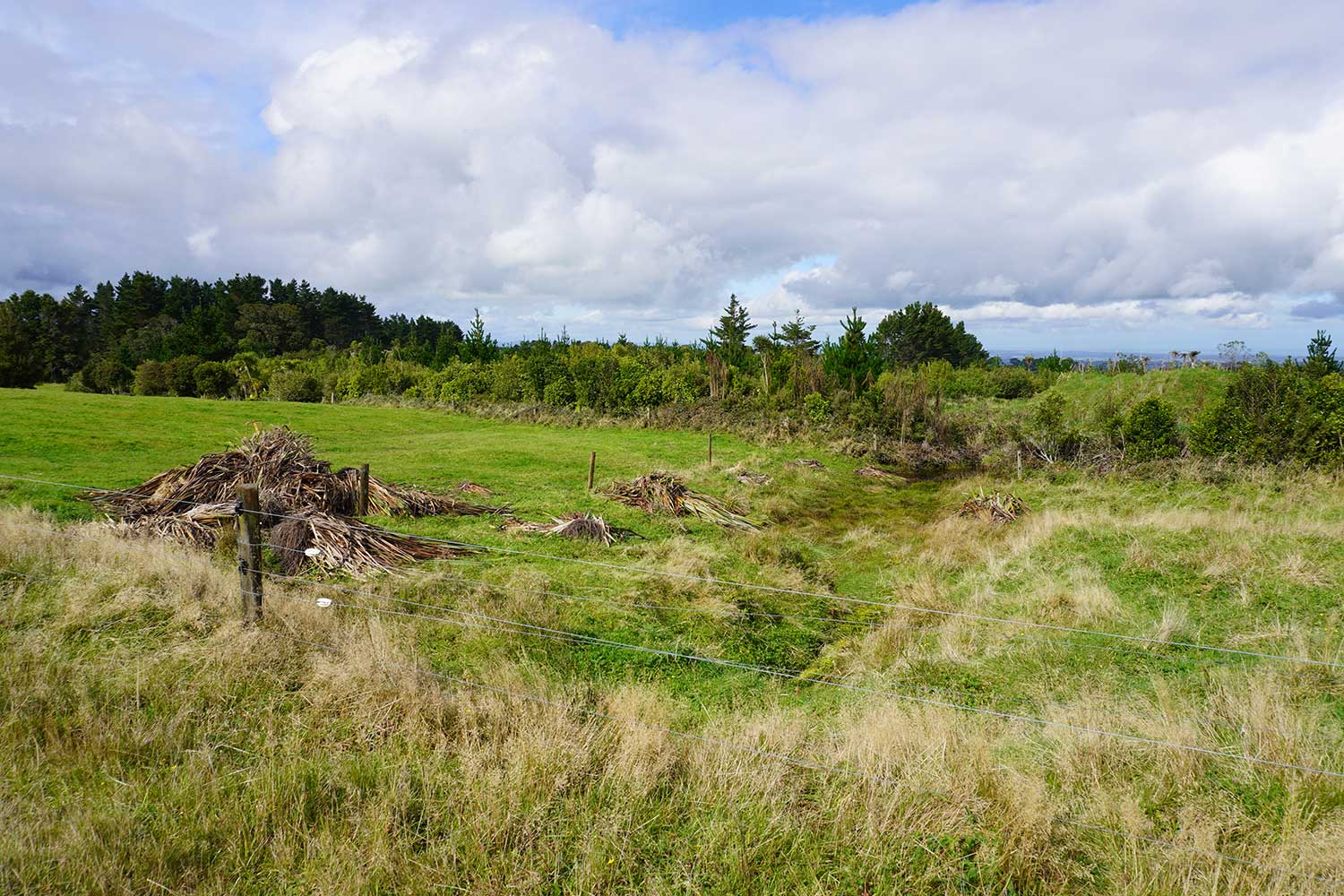
When Paul took over the farm, it bore the marks of past attempted land development. Previous owners had run up to six bulldozers at a time, clearing bush, pushing in hollows, and burying them under soil to create new paddocks. Streams had been straightened, fences ran right to the stream edge, and the wetland area had been grazed to the water's edge.
A large possum population, estimated at over 1,000, had been left unchecked for years. The farm had real production potential but also real problems; high rainfall, significant erosion risk, effluent system gaps, and landscapes that had been pushed harder than it could sustainably handle.

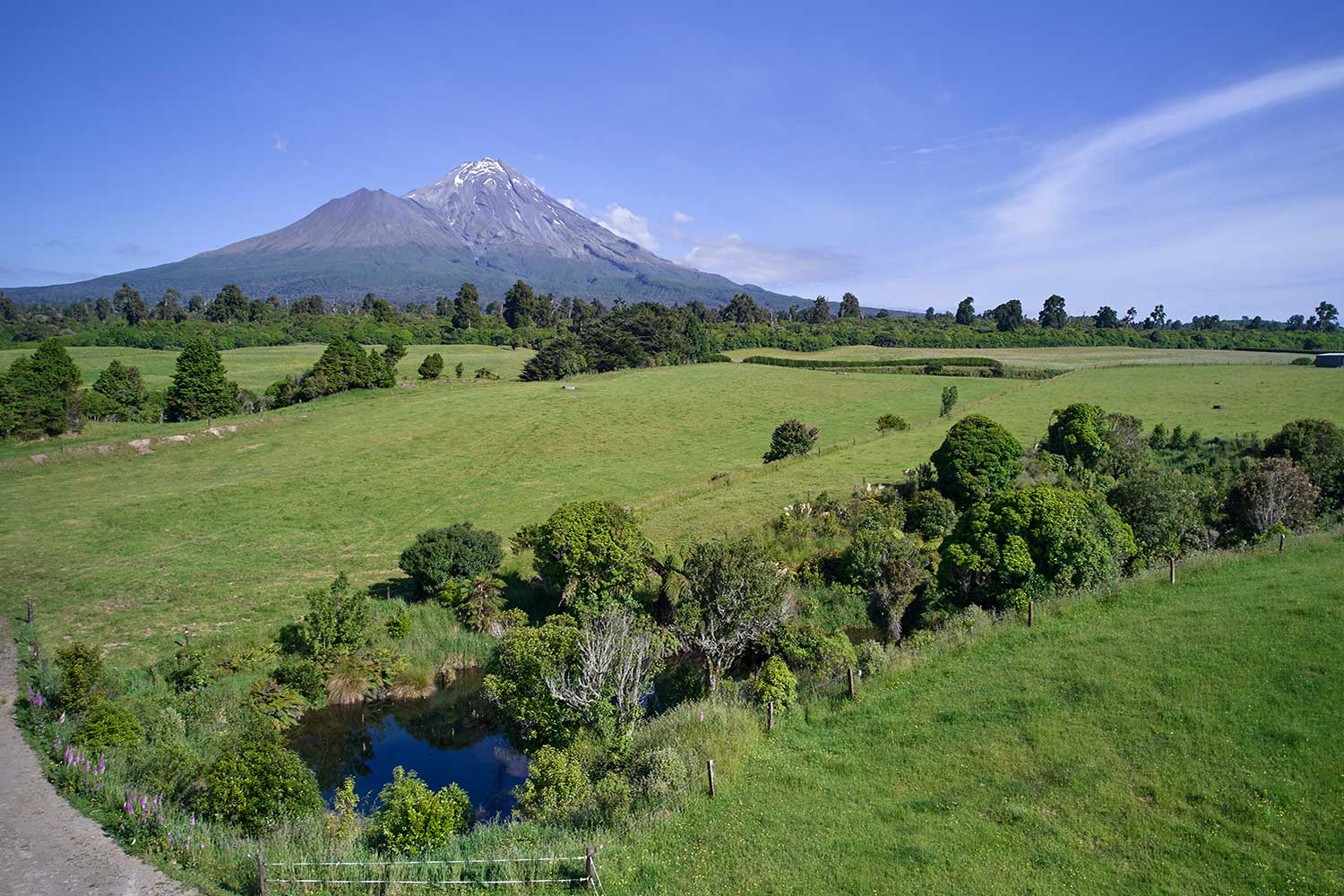
Paul in front of his wetland, which has become a real farm asset.
Location:
Taranaki hill country, high edge of Te Papa-Kura-o-Taranaki – Mt Taranaki National Park
Farm details:
Low stocking rate, barn wintering, 250 cows, 196 ha total, 37 ha in permanent bush
Key landscape features:
Kapuni River, multiple streams and creeks, wetland/lake, steep gullies, pine areas transitioning to native bush
You can farm a farm and make it profitable with biodiversity. The two can work in the same place — we can live together with the animals and the land.
In the first winter of ownership, Paul approached the Taranaki Regional Council for a riparian planting map and support. Having farmed in Taranaki previously, he already understood how the council worked and what was available. From there, the work started quickly — fencing five meters back from waterways, planting natives in riparian margins, and identifying areas across the farm that would benefit from retirement. Council support included assistance with possum control and guidance on riparian planting species and layouts. These are some key actions that Paul took:
The farm runs profitably at a lower stocking rate — no chasing marginal milk, and a much more manageable system.
The native plantings have established fully and are now self-sustaining. "The bush has simply taken over in many areas without further intervention,” says Paul. “The barn has transformed our wintering – nutrients stay on the farm, animal health is better, calving is easier, and the farm can respond quickly to sudden weather events.
The wetland is also thriving, it’s regularly full of ducks and wildlife and naturally self-managing since fencing and planting. The possum population has been eliminated over four years – the sustained effort has been worth it seeing birdsong and wildlife return.”

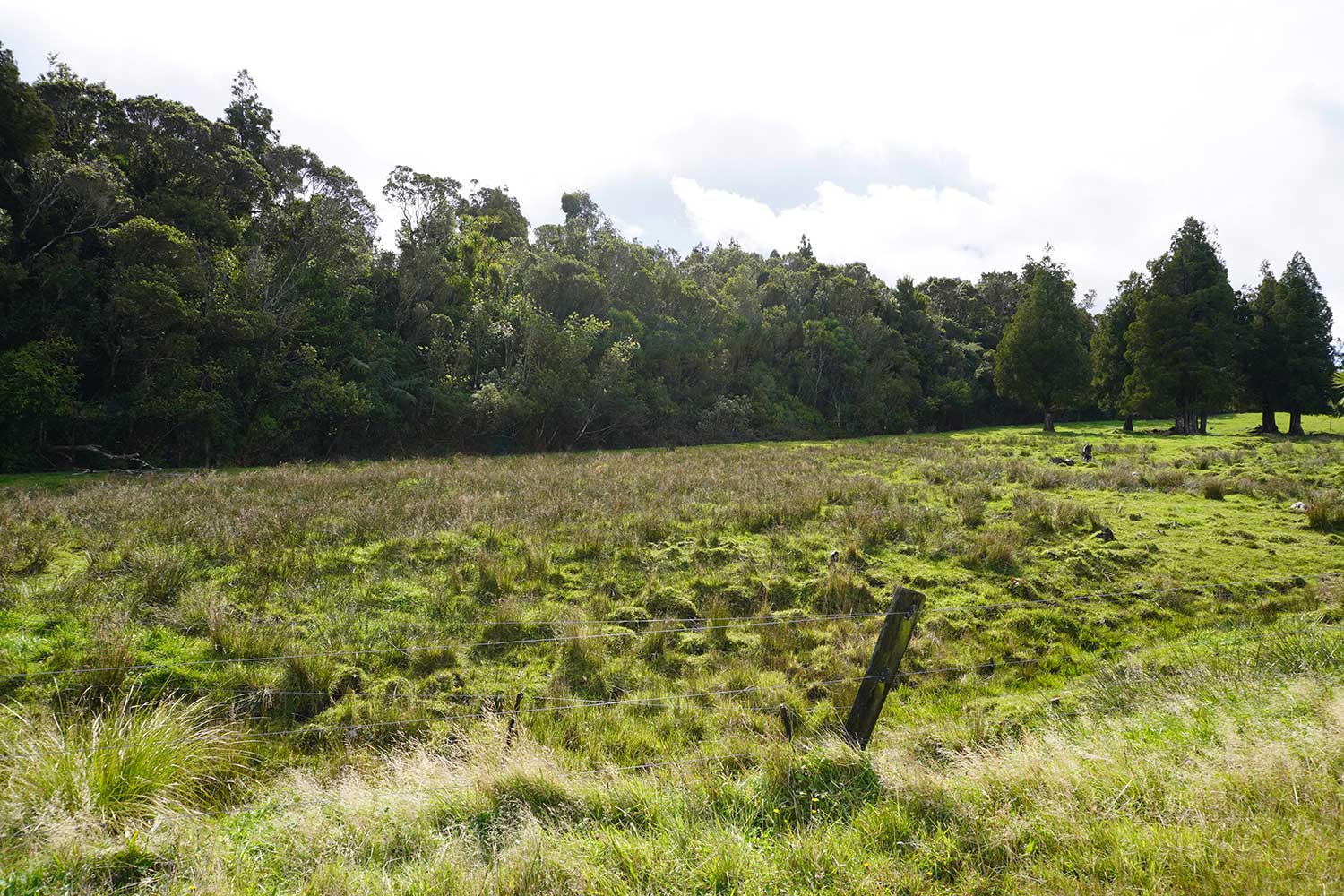
Some of the remnant riparian margins on the farm, showing what the future holds for the rest of the farm's riparian margins.
I'm quite happy to drink a cup of water at the bottom end of the farm. That's what it's about — what comes in and what leaves the farm.


Paul is planning to trial a six-metre buffer strip of oats, plantain, and chicory above the riparian plantings on paddocks that border waterways, these are crops that the cows will happily graze as part of the rotation while also intercepting nutrients before they reach streams. He's also working to complete the farm's effluent system by extending its reach and is developing a settling basin system to manage race and sediment runoff during heavy rainfall events.
Longer term, he sees potential for a motorhome site near the soon to be developed new wetland area, offering tourists a view of the farm's biodiversity in action; a community and commercial dimension that fits naturally with the landscape he's already built.
Now’s the perfect time to check in, plan, and set up for a strong season. We’ve pulled together smart tips and tools to help you stay ahead all winter long.
Whether you prefer to read, listen, or download handy guides, we’ve got you covered with trusted tools to support your journey every step of the way.
Put our proven strategies and seasonal tools to work. Boost production, support animal health and watch your profits hum.
Tools that are backed by science, shaped by farmers and made for this season.
That’s Summer Smarts.
Autumn Smarts brings together the research-backed tools that build resilience and boost performance.
The tools and insights you need to navigate the season with confidence. Backed by research and built for results – that’s Winter Smarts.