Heat stress research
Topics
5 min read

DairyNZ is researching ways to identify when heat stress in dairy cows might occur and how to manage it well. Most areas of New Zealand already have conditions that cause heat stress some days, and the number of days is going to increase with global warming. Better methods for predicting heat stress will help farmers manage their herds and reduce the impacts of heat stress. Read more on how the research is successfully measuring and predicting heat stress in dairy cows and testing different mitigation options.
We're continuing to test how well the grazing heat load index predicts heat stress in cows and how effective common mitigations are at reducing heat stress.
This research aims to provide the information and tools farmers need to manage heat stress effectively in New Zealand’s pasture-based dairy systems. It is investigating when cows experience heat stress, how heat load affects their wellbeing and milk production, and how well different mitigation options reduce its effects.
Unlike some commonly used heat stress measures, which use just air temperature and humidity, New Zealand’s grazing conditions mean that solar radiation and wind speed also need to be considered when assessing heat load. By combining environmental conditions with measurements of how cows respond, the research is improving our ability to identify heat stress risk and evaluate practical ways to manage it.
This evidence will be turned into practical information and tools that support on-farm decisions.
This research will help farmers better understand when cows are at risk, how heat stress affects milk production and cow wellbeing, and which management options are likely to help under different conditions. This could help you identify risk earlier, plan ahead for hot weather and make more informed decisions about options such as shade, cooling and milking management.
As the research develops, it will provide clearer New Zealand-specific guidance to help protect cow comfort and wellbeing while managing potential effects on productivity.

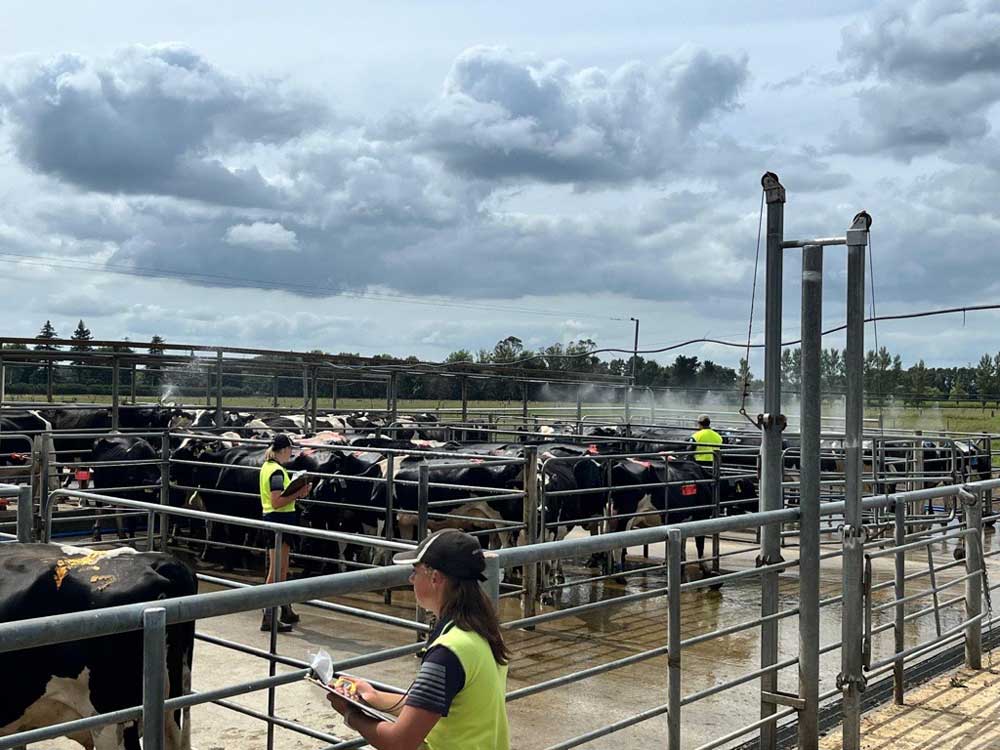
Cows under sprinkler system.
The last few years have been busy, see what we have been up to in the timeline below.
Heat stress trials in the Waikato studying animal response and mitigation options.
Develop a prototype digital heat stress email and SMS alert service and test with farmers, with the aim to assist farmers with better mitigation of heat stress.
Grazing heat load index including solar radiation and wind speed published.
- Heat stress data collection scaled nationwide to better understand heat stress.
- Sensor technology data collected (collars and rumen bolus) to better understand heat stress.
- Updated grazing heat load index for use nationwide and including solar radiation and wind.
Modelled risk of heat stress across New Zealand, now and in future.
- Survey, focus groups and workshops with farmers to understand needs for research and guidance.
- 10 years of research farm data and data from two commercial farms analysed to determine weather impacts on milk yield. This work has informed current research into the impact of heat stress on production.
- Common mitigations compared for ability to reduce heat stress.
- New technologies tested for measuring breathing rate (early indicator of heat stress).
- Trial to understand the which conditions drive cows to use shade.

Cows experiencing heat stress.

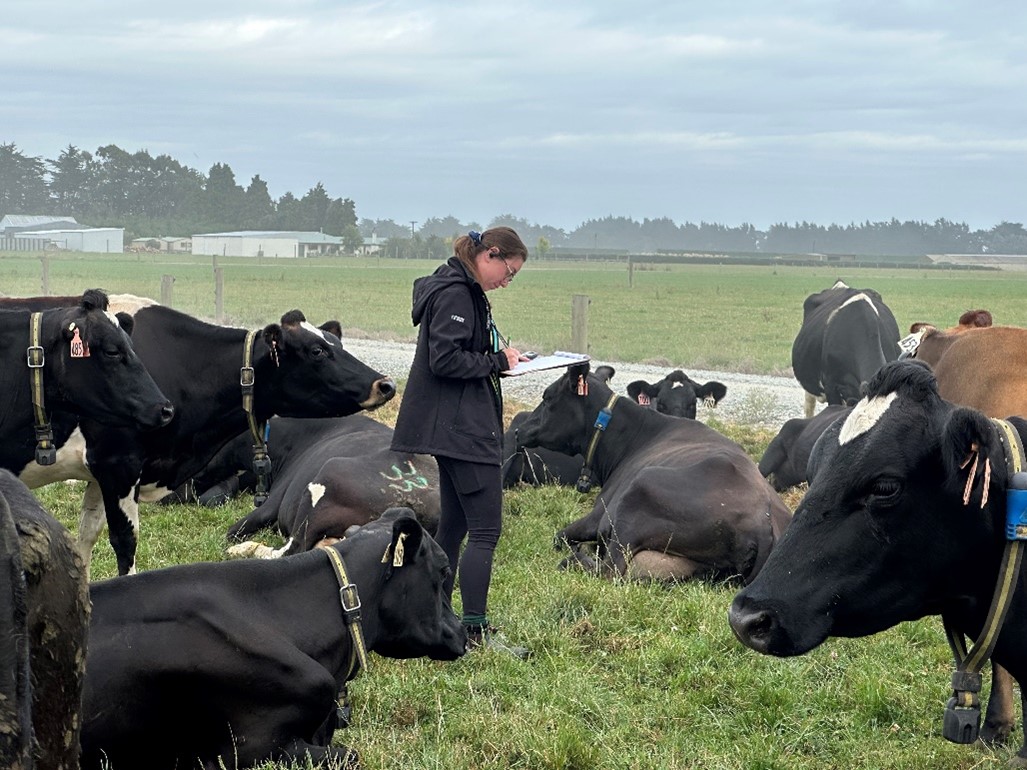
Cows change their behaviour and physiology when they experience heat stress. Increased breathing rate, panting, seeking shade and grouping are some of the signs cows use to lose heat. Research has also shown that individual cows vary in how they respond to heat, with some cows appearing better able to cope than others.
Learn how to recognise the signs of heat stress.

Temperature alone doesn't tell the whole story. Sunlight and wind can significantly change the amount of heat a cow experiences outdoors. This led to the development of the Grazing Heat Load Index (GHLI), which considers air temperature, solar radiation and wind speed to better represent the conditions experienced by grazing cows.
DairyNZ, in partnership with AgResearch and Fonterra, recognised the need for a new thermal heat load index suitable for grazing cattle. As a result, the grazing heat load index (GHLI) was developed and considers air temperature, solar radiation and wind speed.
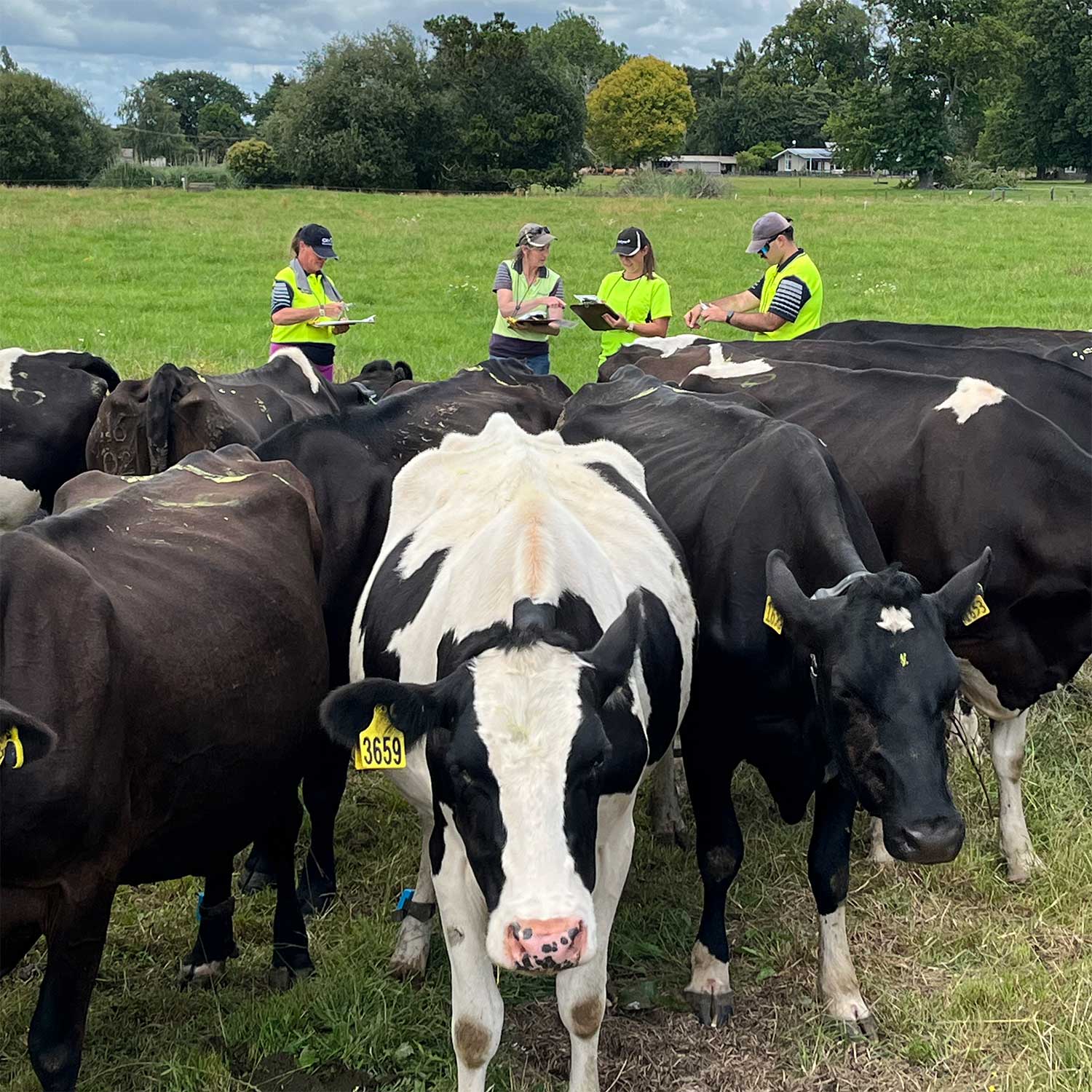
To begin with, most of the research took place in the Waikato and was then extended to collecting data from farms across New Zealand. The goal was to refine and increase the accuracy of the index by using data from more locations and conditions, and compile data into one benchmark database.
This data was used to update the grazing heat load index, taking it from a Waikato index to a national, regionally applicable index.

Weather station for measuring weather variables such as temperature, humidity, wind speed and solar radiation.
Photo credit: AgResearch
The new grazing heat load index was combined with weather modelling to estimate how many days cows are at risk of heat stress each year, across dairying regions. The risk ranged from 37 to 80 days each year, with Canterbury having the highest risk and Otago-Southland and Taranaki the lowest risk. By 2050, the number of heat stress risk days is predicted to rise even in regions which currently have low risk.
We used a mix of farmer surveys, focus groups and co-design workshops to understand how dairy farmers perceive heat stress, what they are already doing to manage it, and what support they need. The research showed that awareness and concern vary by region, with Waikato and Bay of Plenty farmers generally viewing heat stress as a more significant issue than many Canterbury farmers. Farmers wanted better information on the impacts of heat stress, the effectiveness of mitigation options and tools to help their teams identify heat stress.
A trial at DairyNZ’s Scott Farm compared four approaches over seven weeks: once-a-day milking, yard sprinklers, yard misters and daytime shade. The responses of those cows were compared with cows that had no cooling options as heat load increased.
Cows without cooling showed stronger signs of heat stress, including increased rumen temperature, breathing rate and drooling. Shade helped reduce increases in breathing rate and rumen temperature for cows in the paddock, while sprinklers and misters were effective at reducing breathing rates in the yard. Sprinklers were more effective at very high heat loads, while misters provided effective cooling using less water.
The trial also found that the period before afternoon milking can be a short, higher-risk period when cows are standing in the yard. Cows milked once a day had a smaller increase in rumen temperature and spent more time lying, suggesting improved comfort, but produced less milk than cows milked twice a day. These results help build our understanding of how different management and cooling options affect cows under heat stress.


Farmers told us they want to better understand how heat load affects milk production under commercial farm conditions. The next stage of the research will use data from farms across the country to investigate this relationship.
The ability to predict heat stress in dairy cows could help on-farm management decisions, such as timing of milking or choice of paddock, changing milking frequency, breeding choices, tree planting, and installation of portable shade structures.
Read more on management options to reduce heat stress in cows.
Learn how DairyNZ is supporting farmers to reduce heat stress and enhance cow wellbeing in New Zealand’s pasture-based dairy systems. Their scientists are co-developing practical on‑farm strategies and new technology-driven welfare measures to promote both comfort and positive experiences for animals. Join us to explore how animal care underpins a sustainable, competitive future for the dairy sector.
Delivered by Dr Stacey Hendriks and Dr Charlotte Read

Dr Kirsty Verhoek
Dr Kirsty Verhoek
Kirsty is a senior scientist and is part of the DairyNZ team working on developing farm systems and sector-scale solutions for farmers to be competitive, responsible and locally and globally resilient. She has a PhD in ruminant nutrition and greenhouse gas emissions. Kirsty works with DairyNZ’s research teams on a number of projects and is also a sharemilker.
kirsty.verhoek@dairynz.co.nz View Kirsty's profile
Dr Charlotte Reed
Senior Scientist
Charlotte is a DairyNZ senior scientist specialising in cow reproduction physiology and behaviour. She contributes to a wide range of projects, including environmental risk indicators and mitigations, novel traits to improve genetic gain in dairy cows, and cow wellbeing.
charlotte.reed@dairynz.co.nz View Charlotte's profileNow’s the perfect time to check in, plan, and set up for a strong season. We’ve pulled together smart tips and tools to help you stay ahead all winter long.
Whether you prefer to read, listen, or download handy guides, we’ve got you covered with trusted tools to support your journey every step of the way.
Put our proven strategies and seasonal tools to work. Boost production, support animal health and watch your profits hum.
Tools that are backed by science, shaped by farmers and made for this season.
That’s Summer Smarts.
Autumn Smarts brings together the research-backed tools that build resilience and boost performance.
The tools and insights you need to navigate the season with confidence. Backed by research and built for results – that’s Winter Smarts.