Reducing nitrogen loss
Topics
6 min read

Reducing nitrogen losses from your farm can help improve efficiency, reduce greenhouse gas emissions, improve water quality, meet regulatory requirements, and strengthen your bottom line. There are 10 main actions to consider.
Nitrogen (N) is an essential part of a farm’s biological system with pasture, crops and cows needing it to function properly. It is a key component of protein and is utilised in the production of energy through photosynthesis in plants. Cows depend on the protein contained in pastures (or crops) for milk production, muscle growth and development, maintenance and overall health.
Most nitrogen in grazed systems is contained in the soil with a small portion of this taken up by plants, grazed by animals and the surplus N returned to the soil. Additional N-inputs occur via fertiliser, imported feed, and from the atmosphere (through nitrogen fixation) via clover and other legumes.
Excess nitrogen is typical in most grass/clover pastures as the animal’s requirement for protein is commonly lower than the protein content in the pasture. It’s particularly common in shorter grazing rotations and in second round spring pasture, as well as in the autumn as cow demand decreases and through the summer, where irrigation or regular rainfall enables high growth rates. When animals are consuming more protein than they require, the excess is excreted, primarily in urine, with some deposited in dung and a small amount as milk urea.
Nitrogen, when excreted in a urine patch, is deposited in the form of urea, then converted into ammonium (NH4) and then to nitrate (NO3) through a process called nitrification. Nitrate is highly soluble and readily available for plant uptake; however, it is also at risk of leaching losses if drainage occurs. In wet soils with low oxygen levels, it can also be converted into nitrous oxide (N2O), a long-lived greenhouse gas.
A simplified version of the nitrogen cycle is shown in the diagram below:

Nitrogen loss from a farm system can be estimated in different ways, but the most common approach is to calculate ‘Purchased N Surplus’ (PNS). This is back calculated by subtracting nitrogen outputs (milk, meat, crops, and or feed or effluent exported) from nitrogen inputs (fertiliser and imported feeds). Generally, the lower the PNS number, the more efficiently nitrogen is being used. A higher PNS, represents a greater risk of nitrogen being lost to the environment.
Nitrogen losses can also be calculated by Overseer, which includes estimated Nitrogen inputs from clover fixation. In research trials, ‘suction cups’ are used to measure Nitrogen losses.
Nitrogen losses from dairy farms mainly occur when nitrate nitrogen drains below the pasture or crop root zone and ultimately can enter groundwater and/or surface water (via hydraulic connectivity). In saturated soils, nitrogen can also be lost as nitrous oxide emissions to the atmosphere. Nitrogen losses can have significant environmental impacts, including:

When excess nitrogen (mainly as nitrate) leaches below the root zone, it can enter groundwater and eventually surface waterways. High nitrate levels in water can harm aquatic ecosystems, reduce biodiversity, and affect drinking water.

Nitrous oxide (N2O) is a potent greenhouse gas and can be released from saturated soils.
In grazing systems, particularly where pasture dominates the diet and protein intake is greater than animal demand, a large portion of the nitrogen (or protein) consumed by the animal is returned to the paddock, primarily in urine. This can lead to the deposition of nitrogen at concentrations far exceeding the immediate requirements for plant growth.
Where nitrogen is not taken up by plants/crops or converted to other N forms, it can remain in the soil as nitrate. Nitrate is prone to leaching due to its highly soluble nature. This risk is increased when soil temperatures are lower (which slows down microbial and N conversion activity), and there is an increased risk of soil drainage events, such as in autumn and winter, when rainfall increases, and nitrate is lost below pasture/crop rooting depth and/or is available in quantities greater than can be taken up by the plant.
Nitrogen can also be directly lost to the environment from effluent and/or nitrogen fertiliser application if it is applied during periods where there is an increased risk (rainfall, soil compaction damage, winter) and at a rate greater than can be taken up by the pasture or crop
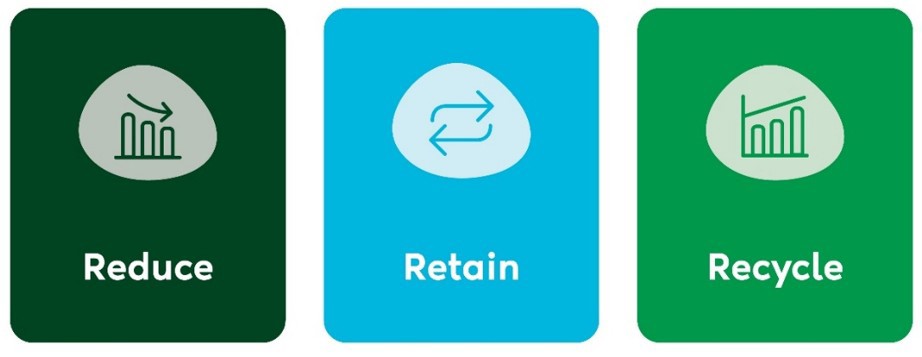
Reducing nitrogen losses ensures more of the nitrogen entering, or existing within the farm system, is exported as milk or meat. Most opportunities to reduce N losses occur through:
1. Grazing Management
Optimising pasture management and pasture utilisation, including regular use of feed budgets is an important part of efficiently using Nitrogen on farm and therefore reducing potential N-losses.
Lower pre-graze pasture cover and short grazing rotations increase protein content and therefore surplus of nitrogen in the diet, thus increasing the risk of N-losses from the urine patch. Longer grazing rotations enable more time for responses to Nitrogen fertiliser and typically decrease the protein-to-energy ratio of pasture.
Extending the round length and ensuring ryegrass pastures are grazed at 2.5-3.0 leaf stage, especially in the autumn, is an important management tool that supports the reduction of N-loss risk in grazed pastures.
2. Fertiliser and effluent use
Nitrogen application - whether fertiliser or effluent - should be applied in the right place, at the right time, and in line with plant requirements. Ensure there’s sufficient time between fertiliser application and the following grazing, targeting a minimum of 18 days when plants are growing well and longer in slower growing conditions. This will help increase fertiliser responses (N efficiency) and minimise the risk of loss to the environment. See Managing nitrogen fertiliser use.
Consider Urease-coated nitrogen fertilisers when applying urea in warmer / drier conditions to reduce ammonia losses (loss to the atmosphere via volatilisation) and ensure more of the N applied is available for plant uptake.
Nitrogen applied in effluent should also be included when planning farm-level nitrogen fertiliser inputs. Farms using higher levels of imported feed will have significant levels of nutrients (including N) imported via feed and often have higher volumes of effluent available to strategically use as part of fertiliser requirements.
Reducing nitrogen inputs prior to and during periods with a higher risk of drainage will also reduce potential N losses.
3. Forages
Dietary N intake can be influenced by management (as above), supplements (as below) and species. DairyNZ research has identified forage crop options that contain lower levels of protein, which if fed strategically during higher risk periods (Spring, Autumn and Winter) can reduce the potential amount of nitrate leached (lost) from the rootzone. These crop options include: catch crops, fodder beet and plantain.
Plantain, specifically the cultivars Tonic and Agritonic (marketed as a blend as Ecotain™), has consistently shown reduced nitrate leaching of up to 60 percent. It has been recognised as a nitrogen leaching mitigation in Canterbury, Manawatu-Whanganui, and Bay of Plenty. It is also a N loss mitigation tool in OverseerFM. The amount of leaching reduction achieved through plantain will depend on soils, climate, and farm system set-up. These case studies show how other farmers have been incorporating plantain.
The use of catch crops, such oats or Italian ryegrass established after fodder beet and/or kale, can assimilate nitrogen contained in the soil. This option supports the risk reduction of nitrate leaching during seasonal periods of soil drainage.
4. Supplementary feed
The option to substitute supplementary feeds with a lower nitrogen content may also support the reduction of livestock urinary N concentrations, leading to a reduced potential N loss risk. For example, the use of less grass silage in autumn, replaced by feeding fodder beet and/or or maize silage will help to reduce the risk of livestock N surplus. To identify the nitrogen content in common feeds, see the supplements page and learn about Milk urea.
5. Genetics
Breeding cows with higher genetic merit can lead to a greater feed conversion efficiency across a herd. A more feed efficient animal results in greater N efficiency, reducing potential animal N surplus and less potential loss to the environment. Read our handy guide to help you make these decisions.
6. Reproduction
Improving the 6-week in-calf rate can improve the rate of genetic gain by increasing options for herd selection and reducing the number of non-productive animals (replacements and carry-over cows). While this is a longer-term N-mitigation option, it will mean less nitrogen is eaten and excreted, because the same amount of milk can be produced by fewer cows, provided there is no increase in stocking rate. Useful statistics around milk production can be found in the New Zealand Dairy Statistics 2024-25 resource.
7. Use stand-off facilities
Feed pads and stand-off pads can be used to capture effluent and reduce the amount of nitrogen deposited on pasture when there is an increased risk of soil drainage events occurring. Effluent generated from the facility can be applied to land using a deferred irrigation regime, so that effluent application is better matched to plant demand. See the stand-off pad page.
8. Irrigation management
On irrigated farms, N loss can be reduced by optimising irrigation systems and application events to minimise the potential for soil drainage events. This ensures that soil water remains within the soil profile and is less likely to migrate below the effective plant rooting depth.
To reduce risk, this may include reducing application rates in the shoulders of the season, reducing irrigation events and during and post rainfall events. Ensuring that irrigation systems are routinely tested for application depth, uniformity and operating pressures will also ensure irrigation water is applied most efficiently. For tips, see Irrigation management and operation.
9. Cultivation and cropping
The presence of soil Organic Matter (OM) ensures that nitrogen contained in the soil profile is better retained through immobilisation. Soils with lower organic matter levels have an increased leaching risk. Conversely, where soils have a higher level of OM, there is a reduced leaching risk. Where traditional cultivation takes place, the OM contained in the soil can be mineralised, leading to nitrogen conversion to a soluble form which can be more readily leached. Minimum tillage techniques, such as direct drilling, reduce disruption to the soil profile, leading to a lower level of mineralisation processes, reducing the corresponding risk of nitrogen being lost to the environment.
The risk of leaching during winter months can be reduced through the use of cover crops (as outlined above). Avoiding leaving ground fallow post-grazing, and the establishment of catch crops can reduce the risk of N leaching.
10. Riparian planting
The establishment of well-developed streamside riparian plantings are effective filters that can assimilate nutrients and other contaminants before they enter surface waterways. This can help support the reduction of nitrogen loss and enable improved water quality and biodiversity outcomes. For more information, see riparian planting.
Farmers in Southland have built different types of wetlands to help manage N loss, see their videos on the wetlands page.
Now’s the perfect time to check in, plan, and set up for a strong season. We’ve pulled together smart tips and tools to help you stay ahead all winter long.
Whether you prefer to read, listen, or download handy guides, we’ve got you covered with trusted tools to support your journey every step of the way.
Put our proven strategies and seasonal tools to work. Boost production, support animal health and watch your profits hum.
Tools that are backed by science, shaped by farmers and made for this season.
That’s Summer Smarts.
Autumn Smarts brings together the research-backed tools that build resilience and boost performance.
The tools and insights you need to navigate the season with confidence. Backed by research and built for results – that’s Winter Smarts.


