Using plantain in Rotorua
Topics
7 min read

Plantain is a practical, low-cost option for Rotorua dairy farmers to reduce nitrogen leaching and help meet environmental targets. By adding plantain into pastures through annual broadcasting and incorporating it into new pastures, farmers can significantly lower nitrogen losses while maintaining profitability.
Dairy farmers in the Lake Rotorua catchment are working under Bay of Plenty Regional Council regulations to reduce nitrogen losses to Lake Rotorua. The goal is to reduce the nitrogen load from 755 tonnes per year to a sustainable 435 tonnes per year. For the 26 dairy farms in the catchment, this means:
Meeting these targets will require most farms to combine multiple nitrogen leaching mitigations – a 'stacking' approach. Plantain is recognised by BOPRC as an effective, low-cost mitigation that can form the foundation of the stack.
Rotorua dairy farmers can achieve 15-20% plantain in their pastures through annual broadcasting, reducing nitrogen leaching by 8-14% with only a 1-2% reduction in profit. Plantain is a low-cost first step that makes meeting the 2032 NDA targets more achievable.

Farming on 100ha, milking 250 cows, running a system 3 farm.
Farming on 265 Ha, milking 740 cows. They bought this farm in 2017.

Doug is a 5th generation dairy farmer, milking 400 cows on 130 ha on Pumice soils.
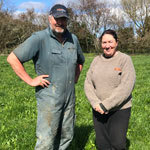
Farming at 600m elevation with high rainfall on 140 ha with Podzol soils with a cemented tephra layer (poorer drainage), milking 450 cows.
Waerenga is a Māori owned farm milking around 1000 cows on 354 ha on Pumice soils on the north-east shore of Lake Rotorua.
Trials conducted through the Plantain Potency and Practice Programme show that plantain is a low cost, moderate impact tool for reducing nitrate leaching. Plantain reduces nitrogen leaching in these ways:
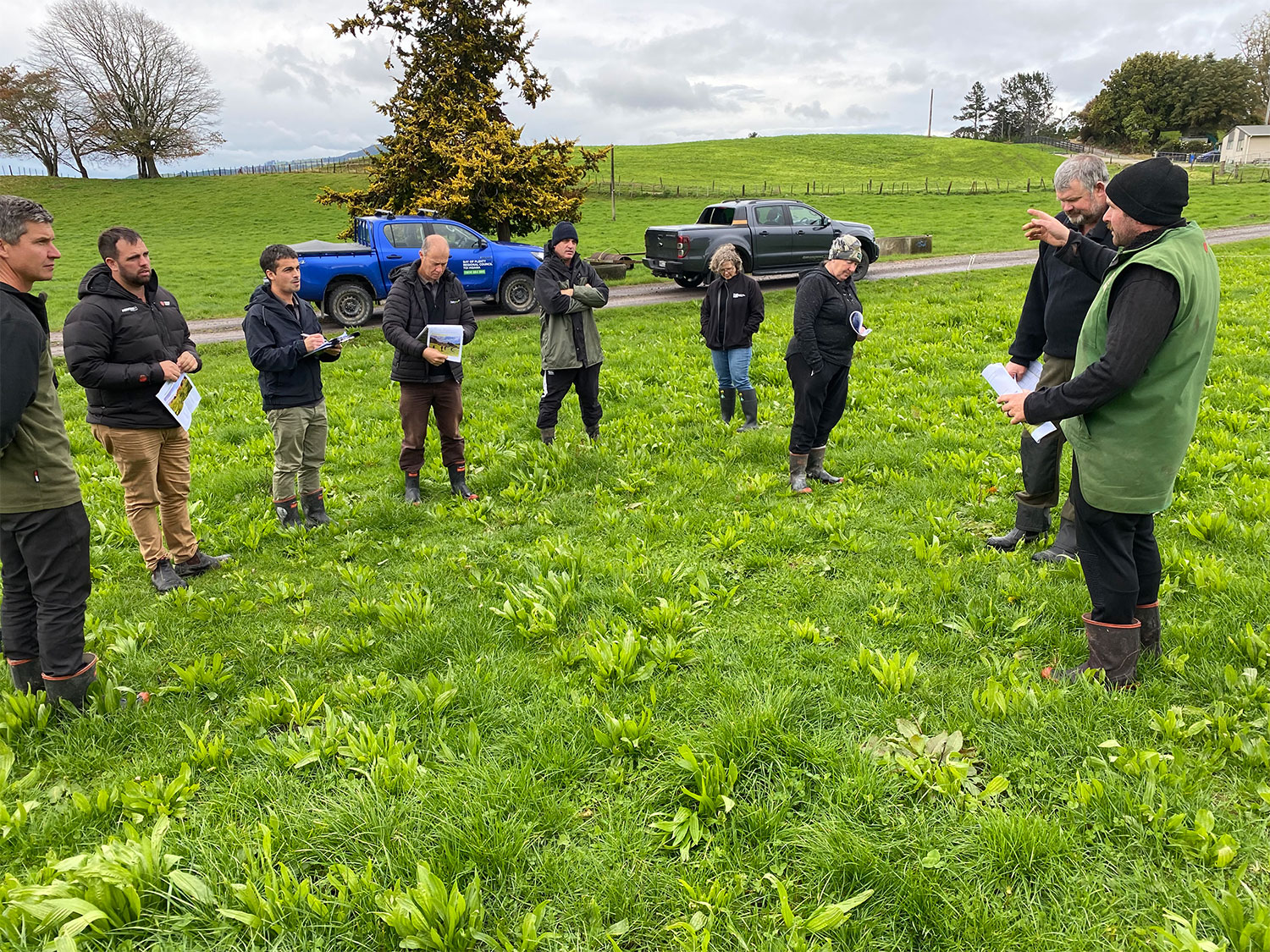
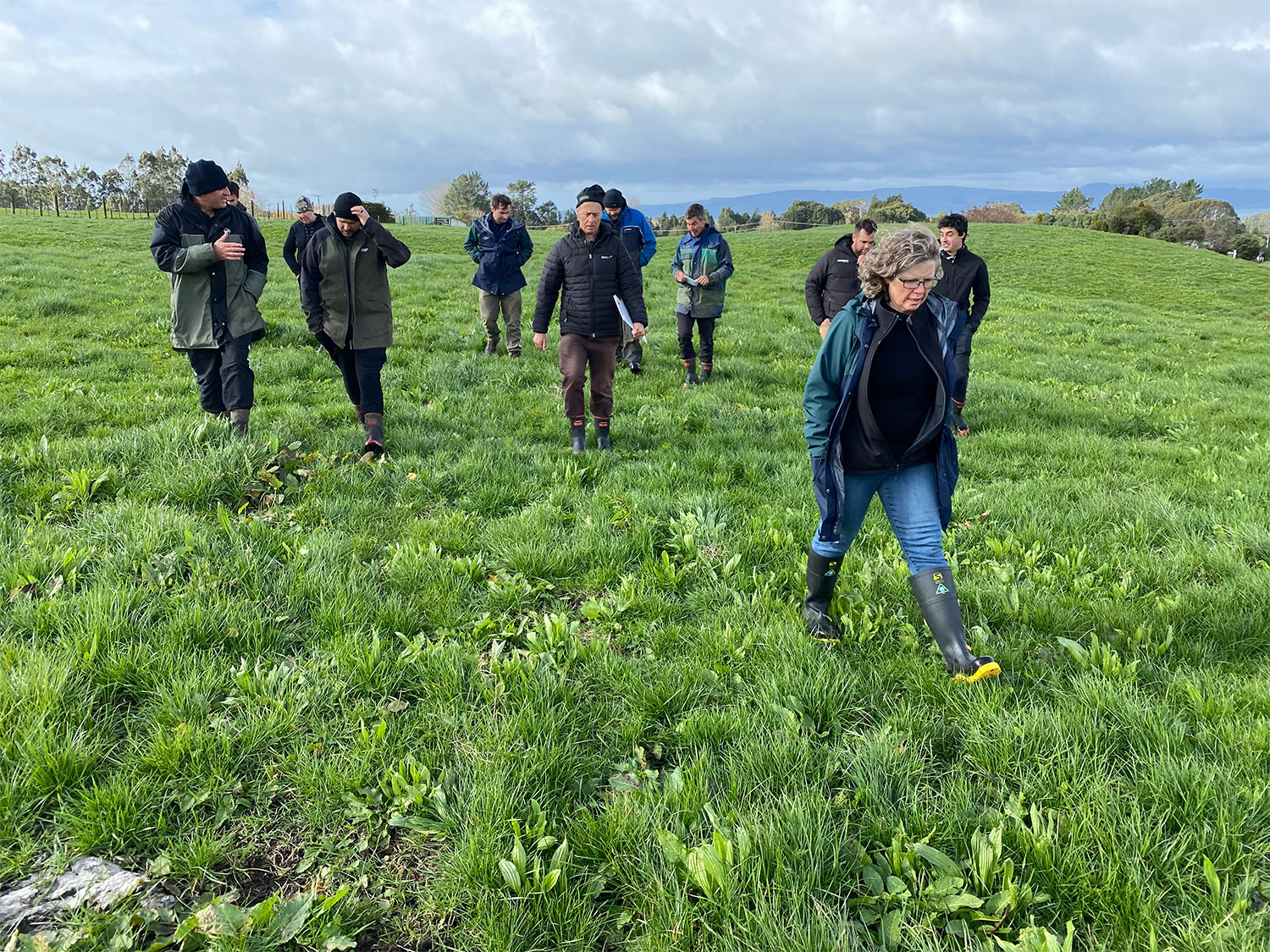
From 2022-2025, DairyNZ worked with five partner dairy farms in the Lake Rotorua catchment as part of the Plantain Potency and Practice Programme. These farms, located on the Mamaku Plateau on pumice and podzol soils at 400-600m elevation, provide practical evidence of what's achievable in local conditions. Through annual broadcasting of Ecotain plantain seed, partner farms achieved:
| Farm | Soil type | Seed rate | Plantain % | Notes |
| Farm 1 | Pumice | 2 kg/ha | 21% | Low N fertiliser system, high clover |
| Farm 2 | Pumice | 2 kg/ha | 18% | Undersowing with plantain and hybrid ryegrass trialled in 2024 |
| Farm 3 | Pumice | 2-4 kg/ha | 18% | New pasture with plantain = 41% |
| Farm 4 | Podzol with cemented tephron layer | 3-4 kg/ha | 12% | Lower in very poorly drained areas, higher in undulating areas |
| Farm 5 | Pumice | 4 kg/ha | 8%* | *17% in area sown; 28% of farm |
Plantain content measured as percentage of total pasture dry matter using visual assessment in autumn.
“Plantain has been a big winner for us in the last couple of years.”
Doug Digby – Farm Three.

Video 06:42 min
Partner farms showed several factors affect plantain establishment success.
Establishment method: Broadcasting achieved 15-20% plantain. Drilling plantain with new pasture following crops achieved 30-65% in those paddocks.
Annual application: Farms that broadcast 2kg/ha annually maintained plantain levels. Some evidence suggests persistence for 2-3 years on certain farms.
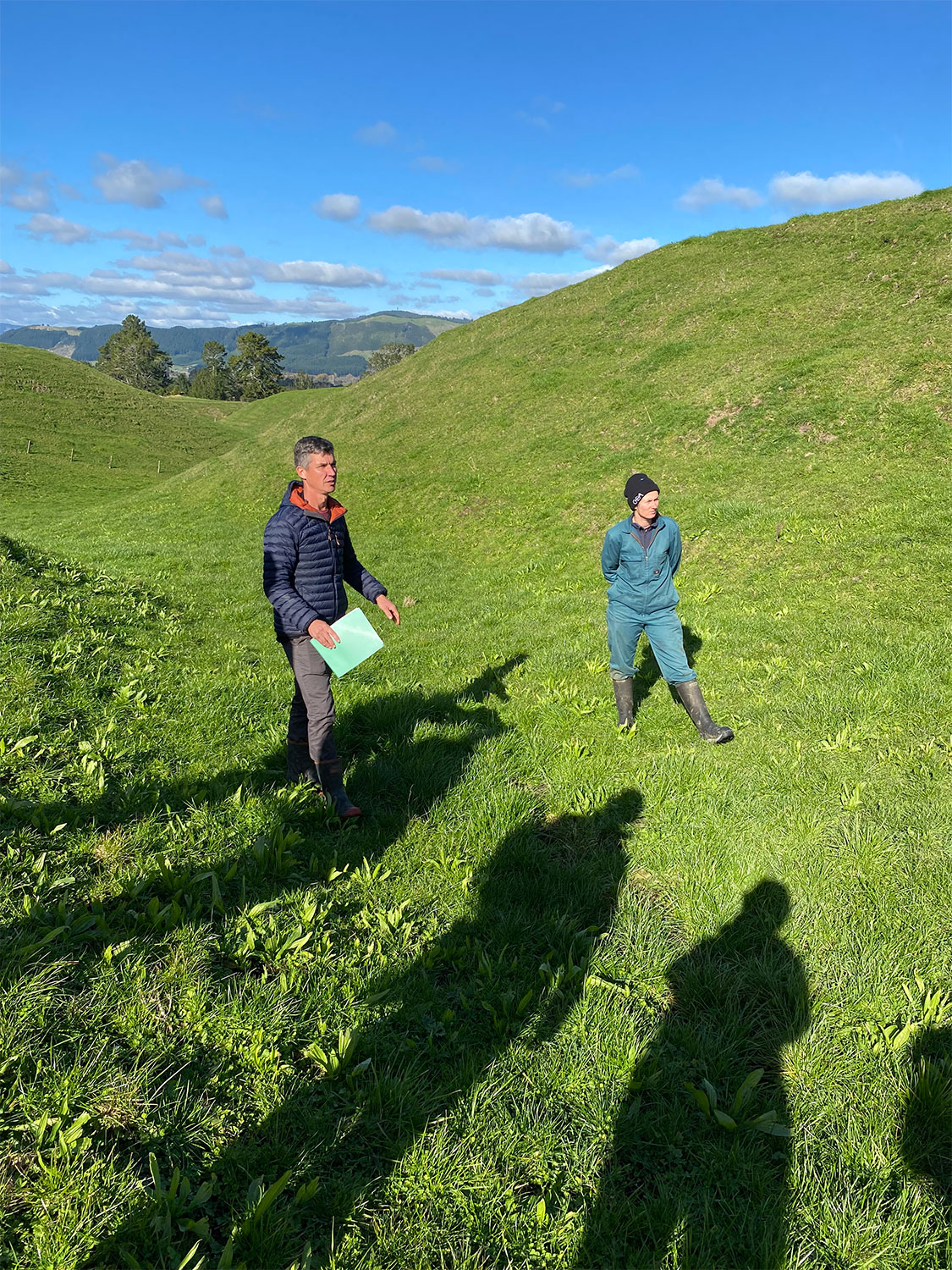
Steep areas: Very steep areas where seed spreading is difficult had lower plantain content. Drone spreading was trialled, but results were variable.
Soil drainage: Farm 4, with podzol soils and an impermeable tephra layer, achieved lower plantain levels (12%) despite similar seeding rates. Low-lying areas prone to waterlogging and pugging had particularly poor establishment while undulating areas achieved similar levels to the other partner farms. An area grazed by dry stock with annual Poa grass burden also achieved lower establishment.
Annual broadcasting
For most Rotorua farms, annual broadcasting of plantain seed is the most practical and cost-effective approach to achieve 15-20% plantain across the whole farm. What works:
Broadcasting 4 kg/ha Prillcote Ecotain seed costs approximately $46/ha per year at current seed prices ($11.40/kg for coated seed). This represents a 1-2% reduction in operating profit. No change in animal or pasture production is expected from use of plantain in mixed swards.
Include plantain in new pastures
When renewing pastures, include plantain in the seed mix to achieve higher plantain content in those paddocks.
“The best results we have had has been broadcasting, starting at about 4kg seed per Ha, but moved to 2kg seed per ha now, ……that’s our plan going forward now.”
Steve and Paula – Farm Two.
No changes to normal grazing management are needed when plantain is part of a mixed sward.
When modelled in OverseerFM, incorporating 20% plantain into pastures reduced nitrogen leaching by 8-14% across the partner farms, with an average reduction of 11%.
Note: The actual benefit may be greater due to additional soil mechanisms not yet captured in the OverseerFM model. Preliminary results from the Lincoln Plantain Potency and Practice farmlet trial shows 26% N leaching reduction from swards with average 17% plantain.
Plantain's value in a mitigation stack
Most Rotorua farms will need to combine multiple mitigations to meet their 2032 NDA. Modelling shows that including plantain in the stack makes meeting targets more profitable than without it.
| Farm 2 (2032 NDA target: 41 kg N/ha) | Starting point (2021-22) |
With 20% plantain | Without plantain |
| N leaching (kg N/ha) | 58 | 41 | 41 |
| Stocking rate (cows/ha) | 2.7 | 2.3 | 2.1 |
| N fertiliser (kg/ha) | 68 | 60 | 0 |
| Imported feed (kg DM/cow) | 1,182 (maize, soybean meal, DDG) |
500 (maize only) |
500 (maize only) |
| Culling date | 20 May | 20 May | 31 March |
| Production (kg MS/ha) | 1,115 | 917 | 870 |
| Operating profit ($/ha) | $4,207 | $3,880 (-8%) | $3,701 (-12%) |
Result: Using plantain as part of the mitigation stack was 4.7% more profitable than meeting the same NDA target without plantain.
| Farm 4 (2032 NDA target: 33 kg N/ha) | Starting point (2021-22) |
With 20% plantain | Without plantain |
| N leaching (kg N/ha) | 45 | 33 | 33 |
| Stocking rate (cows/ha) | 3.3 | 3.3 | 3.0 |
| N fertiliser (kg/ha) | 83 | 55 | 0 |
| Imported feed (kg DM/cow) | 741 (PKE, molasses, tapioca) |
726 (PKE, molasses, tapioca) |
500 (maize silage, PKE, molasses) |
| Culling date | 31 May | 15 Feb | 15 Feb |
| Production (kg MS/ha) | 998 | 947 | 866 |
| Operating profit ($/ha) | $3,452 | $3,120 (-10%) | $2,891 (-16%) |
Result: Using plantain as part of the mitigation stack was 7.5% more profitable than meeting the same NDA target without plantain.
(Modelling based on 2021-22 season data with $9.30/kg MS milk price)
Key finding: Using plantain as part of a mitigation stack resulted in 4.7-7.5% higher profit compared to meeting the same NDA targets without plantain. This is because plantain's low-cost N reduction means you need fewer of the more expensive mitigations like removing all N fertiliser or reducing stocking rate.
Plantain is a low-cost first step, not the whole solution. Most farms will need to stack plantain with other mitigations to meet their 2032 NDA. But starting with plantain makes the overall journey easier and more profitable.
If all 26 dairy farms in the catchment achieved 20% plantain, modelling estimates this would reduce nitrogen entering Lake Rotorua by 35 tonnes per year – approximately one-third of the dairy sector's 96-tonne reduction target. Cost savings from using plantain in place of other mitigations, such as reduced inputs, lower stocking rates and/or earlier culling, are estimated at $500,000 per year if all 26 dairy farms in the catchment implemented plantain at 20%.
One partner farm demonstrates that high profitability and low N leaching are achievable together. Key features of this farm system:
Result: N leaching 25% below catchment average (40 vs 53 kg N/ha) while operating profit was 142-159% of the district benchmark.
“It meant we could reduce our N leaching figure by 6kgs by adding plantain into the system, which meant we have been able to keep our cow numbers up and maintain production - a real win.”
Richard Fowler – Farm One.

Know your current N leaching (from OverseerFM) and your current and future NDA targets.

Decide on broadcasting coverage and timing (spring with P fertiliser is most practical).

Order Ecotain seed from your supplier. Allow 2-4kg/ha bare seed or 4-8 kg/ha coated seed.

Use the DairyNZ Visual Assessment Guide in autumn to measure what you've achieved (note broadcast seed can take up to six months to be obvious in the pasture).

Enter your plantain percentage to get credit toward your NDA.

Maintain plantain levels with annual broadcasting at 2 kg/ha bare seed equivalent.


Thank you to Bay of Plenty Regional Council, and our Rotorua partner farmers Richard and Amy Fowler, Steve and Paula Holdem, Claire and David Beuth, Doug and Susan Dibley, and Waerenga.
Now’s the perfect time to check in, plan, and set up for a strong season. We’ve pulled together smart tips and tools to help you stay ahead all winter long.
Whether you prefer to read, listen, or download handy guides, we’ve got you covered with trusted tools to support your journey every step of the way.
Put our proven strategies and seasonal tools to work. Boost production, support animal health and watch your profits hum.
Tools that are backed by science, shaped by farmers and made for this season.
That’s Summer Smarts.
Autumn Smarts brings together the research-backed tools that build resilience and boost performance.