logo
Apps
Main types of lameness White line disease Sole bruising Sole abscess Sole ulcer Hoof wall crack Foot rot Digital dermatitis Additional resources

Lameness in New Zealand's dairy herds is primarily caused by five types of hoof lesions: White line disease, Sole problems (including bruises, abscesses, and ulcers), Hoof wall cracks, Foot rot, and Digital dermatitis. This page shows what each looks like, which claws are affected, and the main risk factors. Understanding these and how they occur helps farmers identify and manage them more effectively, ensuring the health of their herd.

Main types of lameness

There are five main types of hoof lesions in New Zealand herds which are:
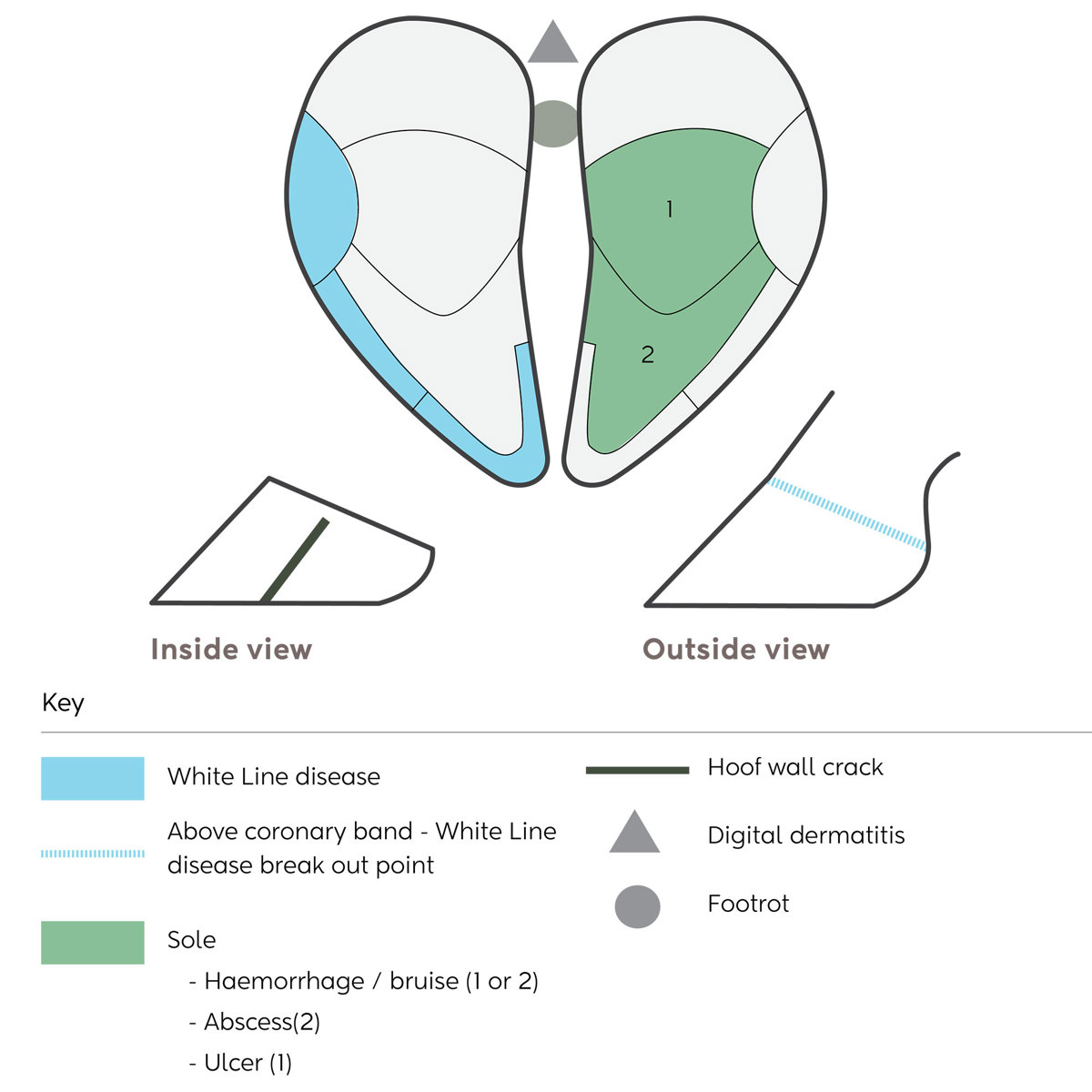
  • white line disease
  • sole lesions (bruises, abscesses, and ulcers)
  • hoof wall crack
  • digital dermatitis
  • foot rot

White line disease

What does it look like?

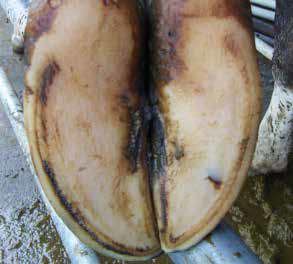
  • The wall is split away from the sole and may be filled with sand and gravel.
  • Breakout or abscess at the coronary band or at the back of the heel.
  • When the outside wall is trimmed, a dark line can be found running vertically up the hoof from the sole to the coronary band or heel.

Where in the hoof?

  • Mostly seen in the back foot outer claw in mixed-aged cows, or
  • front foot inner claw in heifers.

How does it happen?

  • The white line is a weak point in the hoof, which is easily injured.
  • At calving or other periods of stress, the white line becomes more susceptible.
  • Twisting and turning of feet on tracks and yards causes the white line to separate.
  • Stones are forced upward into the white line, which results in further separation of the wall from the hoof.
  • If this continues, stones and bacteria will reach the sensitive tissues of the hoof, causing pain and infection.

Sole bruising (or haemorrhage)

What does it look like?

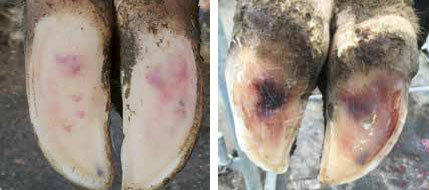
  • Reddish/dark brown areas on the sole.
  • Patches can be localised, or they can cover large portions of the sole.
  • Often the cow is lame in more than one foot and they are stiff when getting up and walking.

Where in the hoof?

  • More likely to be the outer hind limb in cow.
  • Common in heifers in their first few months of lactation.

How does it happen?

  • From changes in the hoof at calving.
  • From very thin soles.

Sole abscess

What does it look like?

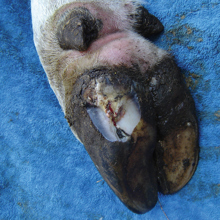
  • A dark hole or crack in the sole.
  • May lead to a pocket of pus.
  • Can be very painful.

Where in the hoof?

  • Common in the toes of heifers.
  • Common in the inner claw of rear feet in cows.

How does it happen?

  • Not well understood.
  • From the changes in the hoof at calving.

Sole ulcer

What does it look like?

  • Has a reddish/dark brown area that is often soft.
  • Underrun horn.
  • Can be very painful.

Which foot?

  • Usually found on the outside claw of the rear feet.

How does it happen?

  • Can be from long periods of standing on concrete e.g. feed pads.
  • Sometimes happens after prior severe lameness, where the claw has become deformed.

Hoof wall crack

What does it look like?

  • A vertical crack usually found on the inner wall of the claw.

Where in the hoof?

  • Cracks appear in both front and back feet on any claw.

How does it happen?

  • Damage to the soft tissue between the claws that then grows down as a crack. Risk factors are the same as for foot rot.

  • Poor conformation of feet e.g. corkscrew.
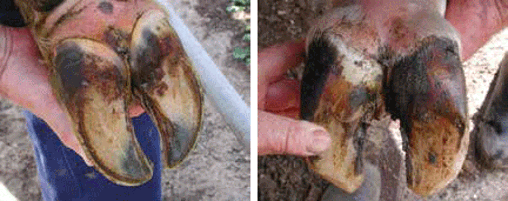
Foot rot

What does it look like?

  • Skin between the claws is broken.
  • Swelling and heat below the dew claws.
  • It often smells.

Where in the hoof?

  • Foot rot can be found in any of the hooves.

How does it happen?

  • Usually, the skin between the claws is broken by a stone, especially under moist hoof conditions.

  • Bacteria then invade the soft tissue, causing an infection.

  • The onset of foot rot is rapid and will continue for at least a week or until complications set in.

  • It is a very painful condition.

Digital dermatitis

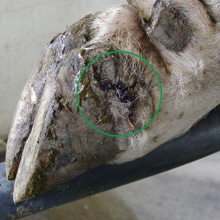
Digital dermatitis is a highly infectious bacterial skin disease of the feet which is a significant cause of lameness in cattle overseas. It thrives on dirty feet and spreads in dirty conditions.

The disease was first identified in five New Zealand herds in 2011 and is becoming more widespread.

What does it look like?

  • Can sometimes be confused for foot rot.
  • Red or grey lesion on the skin above the hoof – usually between heel bulbs.
  • The red surface of the ulcer is sensitive to water pressure or touch.
  • Can progress and have a wart-like appearance.
  • The infection may get deeper into the hoof, causing erosion and underrunning of the heel horn.

Which foot?

  • Usually the back feet (80%).

How does it happen?

  • Digital dermatitis is contagious, so it can be spread from cow to cow.
  • Various bacteria are able to break the skin, usually at the back of the foot, and an infection sets in.

Additional resources

Preventing and managing lameness guide

PDF Animal 1.1 MB
A farmer's guide to managing and preventing lameness on New Zealand dairy farms.

Lameness field guide

PDF Animal 9.8 MB
A farmer's guide to treating lameness.

Additional links

Treating lameness

/animal/lameness/treating-lameness/

Preventing lameness

/animal/lameness/preventing-lameness/

Identifying lame cows

/animal/lameness/identifying-lame-cows/
Last updated: Dec 2025
Share:
Tags related to “Types of lameness”

Related content

A closeup photo of a friesian cow grazing in a grassy paddock Identifying lame cows

Animal

2 min read

Full body picture of a brown cow Preventing lameness

Animal

1 min read

A closeup photo of a cow's back legs and udders with one hoof lifted off of the ground Treating lameness

Animal

2 min read