Rumination data
Topics
5 min read

Rumination, or chewing the cud, is essential for digestion and nutrient absorption. It plays a big role in overall cow health. With wearable technology, you can now monitor rumination time across the herd in real-time. This offers valuable insights into feed quality and quantity, cow behaviour, and early signs of health issues. Focus on trends rather than single numbers and use rumination data alongside physical observations and on-farm information. Rumination is a signal, not a diagnosis - good stockmanship remains key to making informed decisions.
Rumination or chewing the cud is a vital part of a cow’s digestion. It helps break down fibrous feed, supports healthy rumen function, and improves nutrient absorption. With wearable technology, farmers can now track rumination time across the herd in real-time, offering new insights into cow behaviour, feed quality, and overall performance. Learn what rumination data means, what’s normal, what affects it, and how to use it to make better decisions on-farm.
When a cow eats, she only partially chews the grass before swallowing. Later she regurgitates that feed and chews it again - this is the process of rumination. It increases the surface area of feed particles, making them easier for rumen microbes to digest.
Rumination supports digestion and nutrient absorption. It helps maintain a healthy rumen pH and indicates how well cows are functioning.

Typical rumination time
Rumination varies throughout the day and is influenced by feed type, pasture allocation, and cow behaviour. Some devices show daily totals while others show hourly patterns. Both can be useful.
Focus on trends, not numbers
Rumination values can vary widely between cows, herds, and devices. What matters most is how it changes over time- not aiming for a specific target.
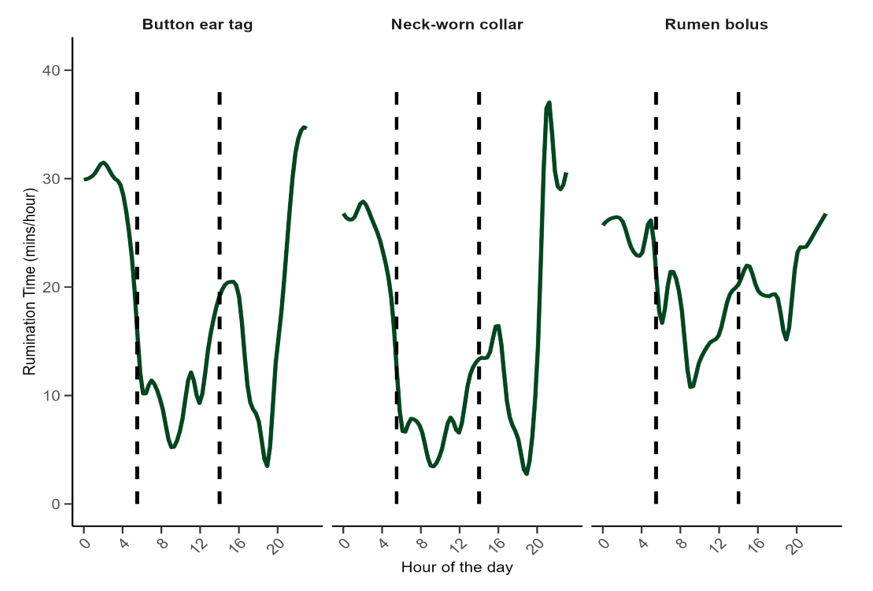
Not all devices report the same numbers. A DairyNZ study showed that cows wearing three different devices (neck collar, rumen bolus, ear tag) had different rumination values, however, the patterns were similar. This is mostly due to different algorithms, different reporting styles (hourly vs rolling average) and different placement on the cow.
A DairyNZ study fitted 100 cows with three different rumination sensors, one on the neck, one in the rumen (bolus), and one on the ear. These cows were monitored for 20 days to compare how each device reported rumination time.
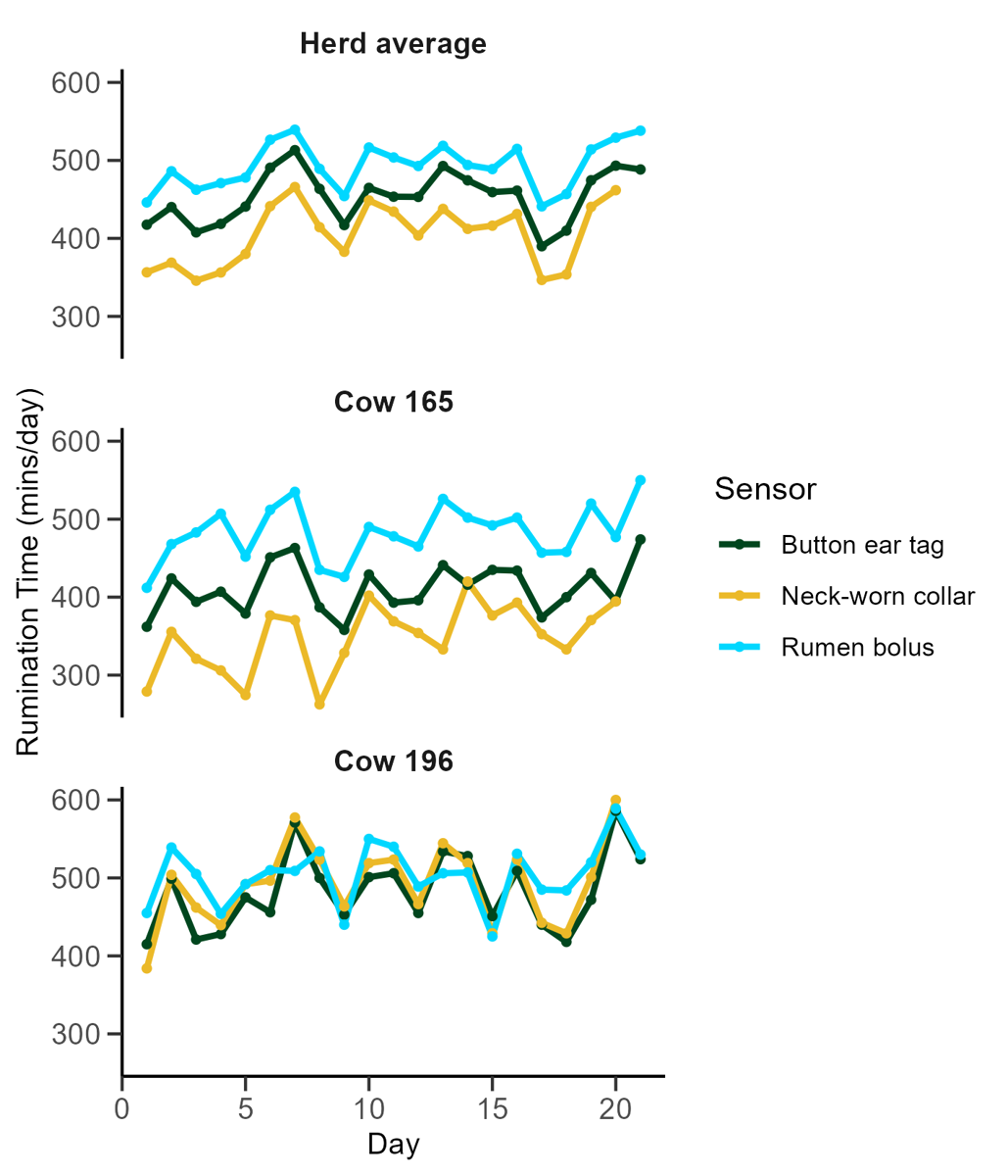
Although all three devices were tracking the same cows, the rumination values reported were different. The patterns were similar, though, for example, when rumination dropped on one device, it usually dropped on the others too.
The study did not manually observe cows’ behaviour while they ruminated, so it was not possible to say which device gave the most accurate number. However, it’s more useful to focus on the direction and size of changes over time rather than the exact value.
Comparing your results with other farms may be misleading. Instead, focus on your own baseline data and track changes over time to assess whether the technology is supporting your goals.
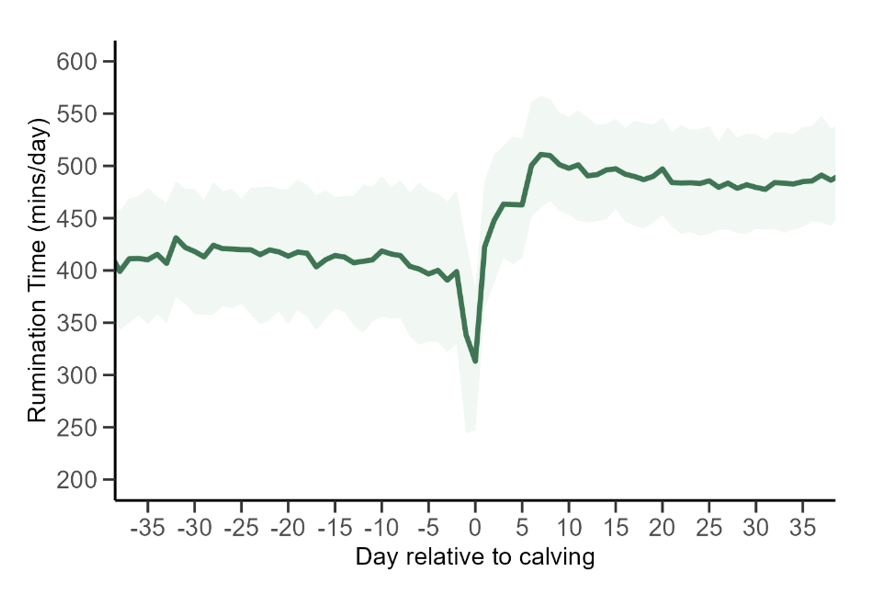
Rumination behaviour is predictable around calving. It typically drops sharply just before and during calving, then gradually recovers over the following one to two weeks. However, the speed and pattern of recovery can vary from cow to cow.
This graph is an example of the average rumination time for 333 three-year-old cows grazing on pasture from 35 days before to 35 days after calving. Cows were milked TAD. The dark green line represents the herd average, while the shaded area shows the range where 50% of cows’ rumination values sit, highlighting normal variation within a herd.
It’s easy to assume that more feed means more rumination, but that’s not always the case. Cows eating high-quality, highly digestible feed may spend less time ruminating because the feed breaks down more quickly in the rumen. This means rumination time doesn’t always reflect how much a cow is eating; it’s more about the type and quality of the feed.
Seasonal changes in pasture quality also play a role. As pasture digestibility shifts throughout the year, rumination patterns can change. For example, summer pasture tends to be more fibrous and takes longer to break down, which can increase rumination time. In contrast, lush spring pasture may reduce rumination time because it’s easier to digest.
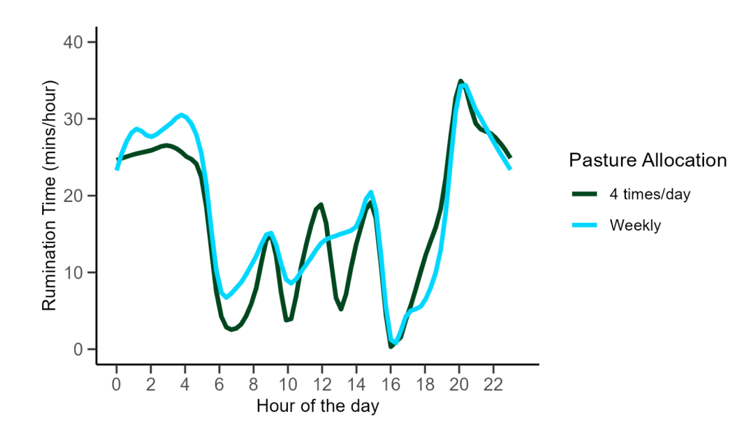
How and when pasture is offered also influences rumination. Offering the same total pasture allocation once or four times a day doesn’t significantly change the total daily rumination time, but it does affect when cows ruminate. Cows may ruminate more at night or between grazing sessions, depending on how feed is allocated.
To get the most out of rumination data, it’s important to monitor pasture cover and post-grazing residuals. These indicators help ensure cows are getting enough energy from the feed on offer, which supports both rumination and overall performance.
Feed type
Weather conditions can have an impact on rumination behaviour. During periods of rain and cooler temperatures, cows may ruminate more, but this may occur while standing or grouped as an attempt to preserve body heat. In contrast, windy conditions may reduce rumination time, as cows are more likely to be unsettled. Extreme weather events, such as storms or sudden temperature changes, can cause rumination to drop sharply. This usually happens when cows stop eating or change their grazing behaviour in response to the conditions. If rumination data shows a sudden dip, it’s worth considering if weather might be the cause before assuming there’s a health issue.
Wearables may trigger health alerts based on sudden drops in rumination or changes in other behaviours depending on the device. These alerts are designed to help you spot potential health issues early but they’re not perfect. A DairyNZ report showed sensitivity (how often alerts catch real problems) is moderate (around 70–75%, meaning about 1 in 4 cows with an issue might not trigger an alert). It’s important to understand what these alerts mean, how reliable they are, and what to do when one pops up. Keep in mind that rumination can also drop naturally during oestrus events (heat), which some technologies factor into their algorithms to avoid false positives.
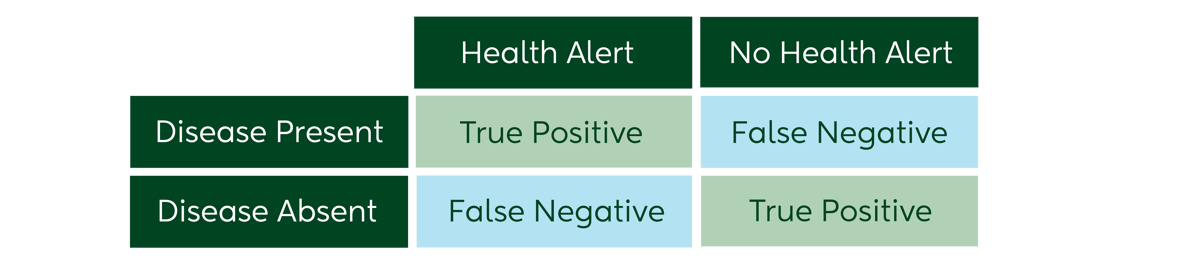
If everything looks normal and the cow is eating, walking, and milking well, it might be a false alert. But if something seems off, it’s worth investigating further. Always check cows physically and interpret data alongside other signs.
Alerts can be triggered by:

Check whether the alert relates to an individual cow or the entire herd.

At the herd level, look for any external factors that may have triggered the alert such as feed or management changes, weather events, or paddock moves.
At the individual level, observe cows for signs like poor appetite, abnormal behaviour, lameness, or mastitis. Also review pasture quality, allocation and grazing behaviour.

Use your stockmanship skills and available data to confirm or rule out false alerts. If you identify a genuine issue, determine what action or follow-up is required. Some cows naturally ruminate less than others. If you're reviewing an individual cow’s data, note what triggered the alert to help build a picture of what’s ‘normal’ for her. Each cow acts as her own benchmark, so alerts are typically based on changes relative to her usual patterns.

Reflect on the outcome - was the alert useful? Use this information to refine how you respond to future alerts and improve your overall herd management. Over time, you'll get better at distinguishing genuine issues from normal variation. The best decisions come from integrating what’s happening in the paddock with what’s showing up in the data.
In addition to supporting cow health and nutrition, wearable data can play a role in reproductive performance, particularly through heat detection. Learn more about how wearables contribute to managing herd reproduction.
Should I move to once-a-day milking after calving?
A dip in rumination at calving is normal and recovery varies between cows. For at-risk cows, , (calving difficulty, poor health lower BCS etc) once-a-day milking or preferential feeding may help.
Is there a target daily rumination value?
There is no set target, the values vary. Focus on trends within your herd. Don’t add straw or hay if it will substitute pasture just to increase rumination, cows need high-quality feed to produce well.
Should I feed more fibre pre-calving to 'stretch the rumen'?
There are no benefits to 'stretching' the rumen. The idea being is that a larger rumen will help cows eat more after calving when energy demands spike- but rumen size is not the limiting factor. What really matters is the cow’s metabolic state, appetite, and rumen health, which determines intake. Cows need balanced, good-quality feed during the dry period.
Now’s the perfect time to check in, plan, and set up for a strong season. We’ve pulled together smart tips and tools to help you stay ahead all winter long.
Whether you prefer to read, listen, or download handy guides, we’ve got you covered with trusted tools to support your journey every step of the way.
Put our proven strategies and seasonal tools to work. Boost production, support animal health and watch your profits hum.
Tools that are backed by science, shaped by farmers and made for this season.
That’s Summer Smarts.
Autumn Smarts brings together the research-backed tools that build resilience and boost performance.


